Sunday, March 25, 2012

Spanish Ham "Tapa" (Tapa de jamón serrano)

This could be a great "tapa" to start a wonderful dinner with friends, co-workers or family.  We just need good bread, thick slices of Serrano ham, cream cheese and a preserve (I use raspberry).


Saturday, March 24, 2012

Osso Buco (Osobuco)

Osso buco is a cross cut veal shank. Although originally from Milan, Italy, this dish is very popular in Spanish cuisine. While in Italy it  is served with risotto or gremolata, in Spain it is served with rice or mashed potatoes. Osso Buco means "a hole in the bone" because the bone has bone marrow, which is delicious, delicate also eaten. The Spanish spelling is Osobuco.


The original recipe is made with white wine. However, many people prefer to use red wine and enrich the flavor with beef stock. In my hometown, the restaurant "El Cojo" used to make amazing osobuco.


Ingredients:

2 veal cross cut shanks or 1 per person
2 large carrots, sliced
1 large leek, sliced
1 red onion, finely chopped
1/2 pound ripe tomatoes, cut in cubes
2 glasses white wine
2 cups brandy
2 cups water, chicken stock or beef stock (I use chicken stock)
olive oil
flour
salt 
thyme


Dust the meat in flour, add to a sauté pan with hot olive oil and brown the meat. Remove the meat from the pan and place in a pot. In the same pan where you cooked the meat, add the carrots, leeks and onions. Sauté just to get the juices of the meat and then add the vegetables to the pot. When hot, add the brandy and let it burn. Then add the wine and cook for a few minutes to burn the alcohol. Next add the tomatoes and the thyme. Finally add 2 cups of water, chicken stock or beef stock. Reduce the burner to low and let it simmer for two hours or until the meat is tender and falling from the bones. Remove the meat from the pot and let the sauce simmer longer to reduce. Then take the sauce out of the pot and strain it with a chinoise and pestle or a strainer and spoon. Return the meat and sauce to the pot and simmer for another 20 to 30 minutes. 
This type of dish it is always better when made in advance. Serve the meat on a platter with fried cubed potatoes and pour the sauce over the meat.


The bone marrow ready to go over a crostini.

Thursday, March 22, 2012

Mushroom "Tapa" (Pintxo de Txampis)

This is one of the most famous "pintxos" from Pamplona, Navarre. Every year, all through Spain, there are "Tapas and Pintxos" meets where many of the bars, taverns, and  restaurants show off their best. This is a very simple and easy way to make a "pintxo." You may remember my previous entry that explains the difference between them. The word "pintxo" is used in the Basque Country and "tapa" in the rest of Spain. Also, "pintxo" uses a toothpick to skewer it.


Ingredientes:

12 mushrooms (2 per person)
6 minced garlic cloves 
12 shrimp
2 tablespoons extra virgin olive oil
salt

Put the olive oil and the mushrooms in a pan. Cook for a few minutes, add half of the garlic, and season with salt. Remove the mushrooms and then cook the shrimp and the other half of the garlic, making sure that the garlic doesn't burn. Season with salt.


Tuesday, March 20, 2012

Chickpea Stew (Cocido de garbanzos)

This stew has different varieties, such as a filling meal called "cocido maragato" from the city of Astorga in Castilla-León which has more than 7 different meats, chickpeas, and cabbage, and is served as 3 different dishes. First the meats, then the chickpeas with the cabbage, and finally a soup with the broth of the cooked chickpeas. For Easter the meats are replaced by desalted and rehydrated cod fish. They are cooked in an earthenware pot called an "olla." 
The dish I made is vegetarian. The garbanzo bean or chickpea is a legume which is rich in vitamin B, fiber and protein.


Ingredients:

1 red onion, finely chopped
1/2 green pepper, finely chopped
4 garlic cloves, finely chopped
2 tomatoes, chopped
1 large carrot, chopped crosswise
1 leek, finely chopped
1 large potato, cut in small pieces
1/2 tablespoon sweet smoked paprika
salt
1 pound garbanzo beans (soak them overnight)
1 cabbage cut in small wedges


First make a "sofrito" with the onion, leek, pepper, garlic, tomatoes, and carrots, and then add the paprika. Next add the potatoes and the garbanzo beans, cover with water, and add a pinch of salt. Let simmer until tender and if necessary add more warm water. 
In a different pot, put water and boil the cabbage. When the garbanzo beans are done, rectify the seasoning if needed. To serve place the stew in soup bowls or pasta bowls and add the cabbage. You can add fried croutons if you wish. 
If you make this recipe with meats, they need to cook from the beginning and require a longer cooking time. If you are making the dish with desalted and rehydrated cod fish, add it at the end and turn off the burner.

Monday, March 19, 2012

Tuna Tapa


If we make the same recipe as the tuna sandwich and bake slices of potatoes, we can make a tuna "tapa."


Ingredients:

1 can tuna
1 roasted pepper, finely chopped
8 black olives, finely chopped
the white of one boiled egg, chopped
2 sweet pickles, finely chopped
1/2 red onion, finely chopped
olive oil mayonnaise

Mix all the ingredients very well in a bowl. Scoop the mix and place it on top of the basted, baked potato. Put the yolk in a strainer and strain with the help of a spoon. Now you have a "tapa."

Sunday, March 18, 2012

Spanish Tuna Sandwich (bocadillo de bonito)

In Spain, bocadillos (also known as bocatas and sandwiches) are an alternative to tapas and pintxos.


2 slices of bread (rustic is best) per person, toasted lightly
1 can tuna  
1 roasted pepper, finely chopped
8 black olives, finely chopped
the white of one boiled egg, chopped
2 sweet pickles, finely chopped
1/2 red onion, finely chopped
olive oil mayonnaise
lettuce


Mix all the ingredients very well in a bowl. Scoop some on a slice of bread, add lettuce and cover with the other slice. Cut in half in diagonal.

Grilled Lamb Chops with Alioli, Artichokes and Fan Potatoes (Costillitas de cordero a la brasa con alcachofas y alioli)

This is a traditional dish from Spain and if we add the alioli and artichokes we make it in the style of Catalonia. The chops are from New Zealand but the organic artichokes are from California. We just bought them in our "Just Local Foods Co-op."


Ingredients:

2 New Zealand lamb racks each with 8 chops 
3 mint sprigs, minced
2 rosemary sprigs, minced
2 garlic cloves, minced
salt

For the recipes below:

8 artichokes, peeled and cut in halves
1 potato per person cut in the form of a fan

To marinate:

Cut the racks in individual chops. Make a marinade with the mint, rosemary, garlic and a bit of salt. Rub the chops well and put them in a baggy. Close it and keep overnight in the refrigerator.

For the alioli:

2 egg yolks
2 garlic cloves
olive oil
a couple of drops fresh lemon juice
a pinch of salt

In a blender at the lowest speed, put the egg yolks and garlic and then pour in the olive oil little by little until it thickens, creating the consistency of mayonnaise. Add the lemon juice and salt, blend 1 more minute and pour the mix in a serving bowl.

For the artichokes:

Clean the outside leaves until you get to the tender white leaves. Cut off the green of the stem and the top green of the artichokes and 
discard. Cut the artichokes in halves.

While the potatoes are cooking in the oven (see below), put the artichokes (drizzled with olive oil and a pinch of salt) in an aluminum pouch on a grill over hot coals. After 10 minutes, turn the pouch over and add the lamb chops to the grill. Turn the chops once to grill on each side. Remove the chops and artichokes when done.

For the fanned potatoes:

4 large potatoes, peeled
3-4 tablespoons olive oil
salt and pepper
sweet Spanish paprika

Slice the potatoes lengthwise into 1/4 inch slices to within 3/4 inch of the bottom. Carefully spread the slices open in a fan shape and brush both sides with olive oil. Sprinkle the potatoes with salt, pepper and paprika. Bake at 400˚ for one hour or until tender and brown, basting occasionally with more olive oil.


Arrange on a platter the chops, the artichokes and the fan potatoes. Drizzle with alioli, or serve the alioli in a small bowl.

Friday, March 16, 2012

Fideuá

This dish has become a tradition for reunions of family and friends. It doesn't have a long history like other Spanish dishes. It started in 1960 in the city of Gandia, Valencia, to create something different than "paella." They started using vermicelli noodles instead of rice and it is served with alioli (a garlic mayonnaise - check entry for patatas bravas). 

The secret of this recipe is the fish broth. The better the broth, the better the dish. If you live on the coast and have access to fresh fish, make the broth from scratch with rock fish, crabs, seafood, 1/2 green pepper, 1 onion, 1 leek, 1 celery stalk,  and 2 big carrots. Let it simmer until the liquid reduces. Finally, strain. 


Ingredients:

6 medium squid, cut crosswise
olive oil
6 baby artichokes, cut in quarters 
12 shrimp
12 New Zealand mussels or fresh Prince Edward wild mussels
6 tablespoons homemade tomato sauce
9 ounces fideuá noodles
1/2 tablespoon sweet Spanish paprika
1 pinch saffron
1 red pepper, roasted
6 cups fish broth
salt and pepper to taste
lemon wedges

Put the squid in a paella pan or regular pan and cook in olive oil until they lose their translucent color. Add the paprika, mixing well with the squid for about 2 minutes. Do not burn the paprika. Add the tomato sauce and stir. Add the pasta just to get it wet and the saffron, keep stirring, and then add the rest of the broth. Next add the saffron, the baby artichokes, and red pepper. Cook until the pasta starts getting tender and then add the other seafood and cook until the pasta is done. If it's getting dry, add more hot liquid (broth or water). When done, serve with lemon wedges and alioli.


Thursday, March 15, 2012

Pargo in Papillote (Pargo en Papillote)

"Papillote" is French for a parchment pouch where fish is steamed. Again, this is an easy way to cook and because it is steamed all the juices stay inside the fish.


Ingredients:

1 big leek, cut in julienne
1 red pepper, cut in julienne
1 yellow pepper, cut in julienne
1 green pepper, cut in julienne
1/2 onion, cut in julienne
3 garlic cloves, minced
1 1/2 lb. pargo fish
juice of 1 fresh squeezed lemon
sea salt and pepper to season

Cut a piece of aluminum foil about 2 inches longer at each end than the size of the fish. Lay the vegetables along the length of the foil and add salt. Lay the fish on top of the veggies and season with fresh lemon juice, sea salt and pepper. Cover the fish with another piece of aluminum foil and seal the foil pieces, forming a pouch. Preheat the oven to 425˚ and put the pouch in the oven on a baking sheet for 15 minutes. Remove the fish and let it rest in the pouch for 5 minutes. The fish should be juicy and flaky. Before serving I sprinkle it with some Hawaiian black sea salt. Serve with lemon wedges.

Wednesday, March 14, 2012

Tuna Stew (Marmitako)

"Marmitako" is a traditional dish from the Basque Country. The name comes from the word marmita (pot) and the suffix ko (from), so it means from the pot. It traditionally made with tuna but today salmon is also used. This is the food that was elaborated in a pot on the tuna fishing boats. A dish that the fisherman ate and still eat, but now it has passed along to everyone's kitchen and it is not exclusive of the fishermen. In Cantabria, a region bordering the Basque Country, it is also known as marmita or sorropotún. 
Marmitako is a very popular dish and in many towns and cities they have cooking competitions. Many men compete and there is a reason for this. In the Basque Country it is very typical that  groups of male friends organize themselves in what it is called txokos -  gastronomical societies where no women are allowed. The txoko is a place where men get together to cook and experiment in the kitchen. They have had a big influence in maintaining and promoting Basque cuisine.


Ingredients:

1 pound tuna (1 thick tuna steak) cut in bite size cubes
1 onion finely chopped
1 green bell pepper finely chopped
6 large yukon gold potatoes in chunks (tear off the pieces with a knife instead of cutting so you expose the starch)
1 dry choricero dried pepper or dried chile ancho
1/4 tablespoon sweet Spanish smoked paprika (I add a bit more because we like the smoky flavor)
1/4 tablespoon  picante Spanish smoked paprika
1 cup white wine
fish broth or water to cover the ingredients
Salt and pepper to taste

In a pot or "marmita" put a tablespoon of olive oil and cook the onion and green pepper until the onion gets translucent. Add the potatoes, stirring them well. Then add the paprika and stir well for a couple of minutes but be careful not to burn it. Otherwise it will give a bitter flavor. Season with salt and pepper.Add the glass of wine let it reduce. Then add the fish broth or water to cover the potatoes and then add the seedless dried pepper cut in half lengthwise to rehydrate. Cook everything on a medium to low heat. After an hour remove the dried pepper and spoon the meat out of the skin with a spoon, putting the meat back in the pot. When the potatoes are done, add the tuna cubes and turn off the heat.


Serve in a soup bowl or plate, add some homemade croutons or fried bread croutons, and some crunchy micro greens.


Monday, March 12, 2012

Egg over a Bed of Manchego and Carrots

This dish can be done with a poached or mollet egg (see mollet eggs entry.) We just need to shave some manchego cheese and carrots then place the egg on top and add more cheese and carrots. It is a very simple and quick to make.


Friday, March 9, 2012

Manchego and Quince Amuse-Bouche

This amuse-bouche is inspired by the typical Spanish dessert of "queso con membrillo"  (cheese and quince) and also by an amuse-bouche that we were served in a spoon at the Parador Nacional in Teruel, Spain. It was made of tomato preserve and a cheese from the region. An amuse-bouche is a bite size hors d'oeuvre, a chef's selection that is not part of the menu whose purpose is to tease your taste buds and show the creativity and technique of the chef. A master of this is Ferrán Adriá, considered the best chef in the world. In my case it is just playing with food and having fun with it. There will be only one serving per person. 


Ingredients:

Manchego cheese cut in cubes
quince paste cut in cubes

Thursday, March 8, 2012

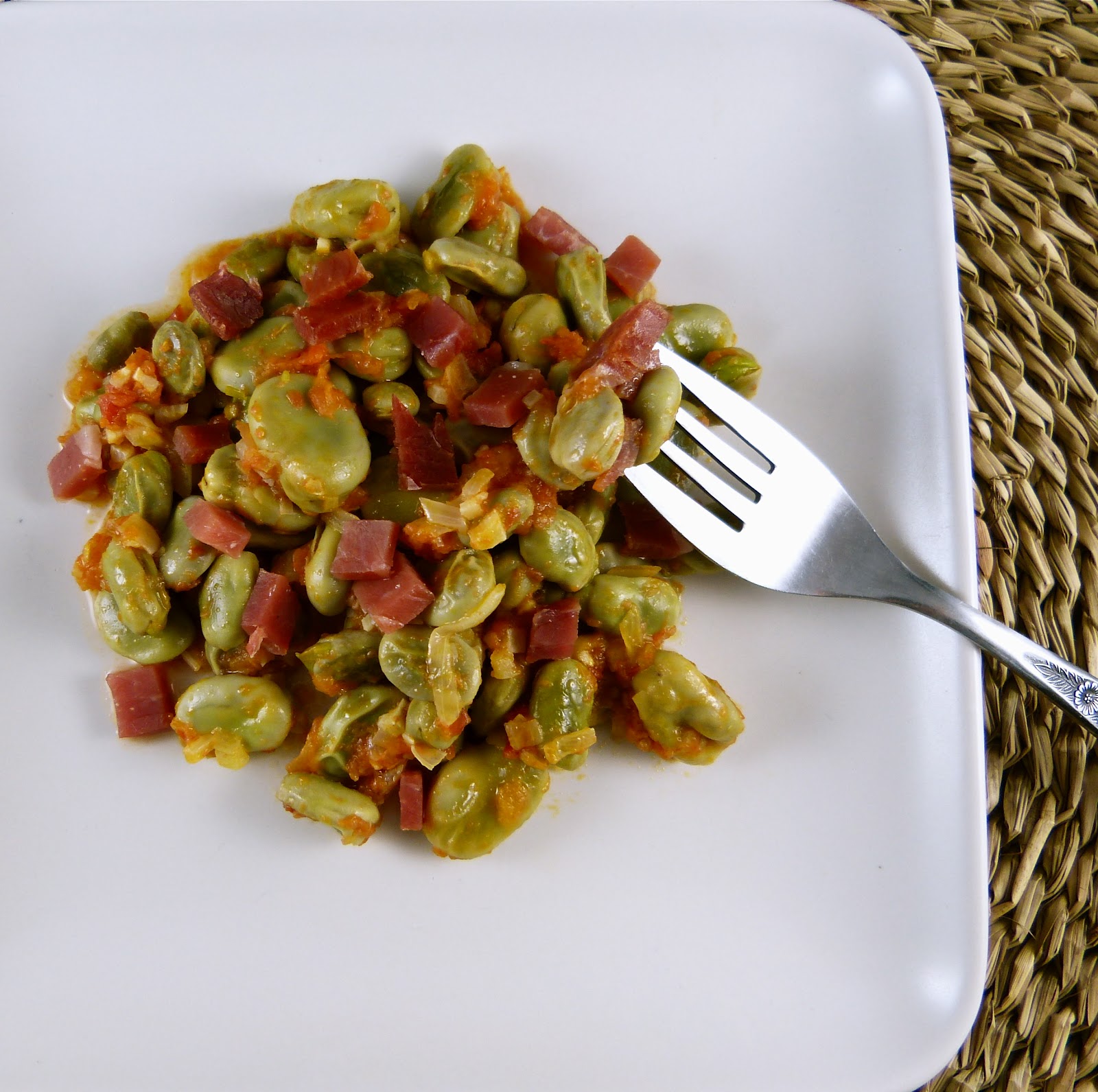
Fresh Haba Beans (Habas con tomate y jamón)

The haba bean was the only bean known in Europe until the discovery of the new world. The habas come in a pod and they have to be removed. If they are fresh and green they are called habas but if they are dry they are fabas.


In my house it was not a dish that was made often since my dad disliked them very much to the point of getting sick. There is a good reason behind that. During the Spanish Civil War (1936-1939) my dad was just a 10 year old boy. The three years of war stole his childhood  and those of many other kids of his generation. Three years of fear. Three years of seeing what no child should see. Three years of bombs, shootings, massacres, and planes dropping bombs like candy. Three years of  running to find shelter, looking for food, helping the injured, hiding the innocent. Three years! Three years of brother against brother, neighbors against neighbors.

The day of the bombing of Gernika or Guernica, there were two other towns bombed that had as much damage or more. One was my father's hometown and the other Durango. My hometown lost most of its houses to the German bombs.

My dad and his family had to move to a good samaritan's "caserio" (Basque farm house).  Much of his time was spent picking haba beans -  eating them raw and bitter or if they were lucky cooked with some lard. That is the reason he hated them. Sometimes my mom would make a small portion for my uncle who, contrary to my dad, never grew to dislike them. When my uncle would have some I would always ask him if I could have some myself because I really enjoyed them. I am glad my mom always made them for my uncle.

Yesterday, I found fresh habas in our "Just Local" store so I bought some, peeled them and cooked them today for lunch for my husband and me. Usually, it doesn't have tomatoes.


Ingredients:

1 pound fresh haba beans
2 tablespoon olive oil
2 garlic cloves finely chopped
1/2 onion chopped
2 grated riped tomatoes
1 thick slice Serrano ham, cut in cubes
salt and pepper to taste

On a low heat  put the oil,  onion and garlic in a saucepan. When the onions are getting translucent, add the haba beans and cover with a lid. When they are getting tender add the tomato and let it simmer until they are done. Finally add the serrano ham and serve.


Vegetable Casserole (Menestra de verduras)

Two areas in Spain along the Ebro River are Navarra and La Rioja. They are known for great vegetables, such as green beans, peas, artichokes, white asparagus, cauliflower, carrots, etc. Because of the abundance of these vegetables, a traditional dish is the "menestra de verduras." Now, it is a dish eaten all over Spain, especially at this time of year. I was lucky to find most of the ingredients at "Just Local."


Ingredients:

6 baby artichokes, peeled and cut in halfs or quarters
1 cauliflower head
1 pound green beans
6 fresh white asparagus, peeled
1 can peas
3 eggs
Serrano ham, cut in little cubes

Peel the asparagus with a potato peeler until you get to the tender part. Boil the vegetables in batches. Since they need different boiling times, use two pots to speed up the process. In one pot with a pinch of salt, boil the asparagus until tender. In the same pot  boil the cauliflower until tender, then boil the green beans and reserve the water. At the same time that the asparagus are boiling, in the second pot boil the artichokes with few drops of lemon and salt until tender. Then boil 3 eggs and discard the water because it is bitter. 

In a casserole place some olive oil and the chopped garlic and sauté lightly. Then add 2 cups of the reserved water and about a tablespoon flour. stirring to thicken the sauce. Then arrange the vegetables and eggs on a platter with some of the juice and top with the Serrano ham. (some people like to sauté the ham with olive oil and then top the dish with it.)


Wednesday, March 7, 2012

Oysters with Lemon Sauce (Ostras con salsa de limón)

Oh! Oysters...


Ingredients:


the juice of two to three lemons
hot smoked paprika
2 teaspoons tabasco or another hot sauce
salt and pepper to taste


Mix all the ingredients very well and pour over the oysters, serve with a lime or lemon wedges.


Pasta with Garlic Shrimp and Light Carbonara Sauce (Pasta con gambas al ajillo a la crema carbonara)

This is a very simple dish to make. 


Ingredients:

1 lb. pasta
water
salt
1/2 onion finely chopped
3 garlic cloves
5 slices bacon
1 pint cream
1 lb. raw shrimp, peeled and deveined
parmesan cheese
Salt and pepper to taste

Boil the pasta with salt "al dente." It will finish cooking when we mix it with the sauce.

In the meantime, cook the onion and the garlic in a sauce pan on low heat until it gets translucent. Then add the bacon (that has been precooked in a microwave oven until crunchy and then cut in small pieces), the cream, salt,  pepper, and shrimp. Cook the shrimp lightly in the cream sauce until done. Then combine the shrimp and sauce with the pasta and mix well, letting the sauce reduce and add the parmesan cheese.


Sunday, March 4, 2012

Brie Canapés with Artichoke Dip (Canapés de alcachofas)

How to make a dip more interesting: In this recipe we make a crostini, add brie which doesn't have a very strong flavor and is a little bit savory, and top with an artichoke and parmesan dip that has a strong and naughty flavor.


Ingredients:


crostini
brie and serrano ham


For the dip:


1 can artichoke hearts, quartered
1/2 cup mayonnaise
1/3 cup grated parmesan cheese
2 teaspoons lemon juice


Mix the dip ingredients in a bowl, cover, and microwave until hot. Then stir the dip and let it rest a few minutes before finishing the canapés.


Saturday, March 3, 2012

Grilled Baby Artichokes (Alcachofas a la brasa)

This is great time of the year to eat artichokes. One of my favorite vegetables, in reality the artichoke is a thistle and the edible part is the bud of the artichoke flower. It is a Southern European product that grows along the Mediterranean. One way to make them is on the grill to serve as a tapa or side dish.


2 baby artichokes per person
lemon juice
olive oil
Maldon salt o sea salt
aluminum foil


Remove the outer green leaves until you get to the lighter color. Cross cut the top of the artichoke and then cut them in half or quarters. You will have to do this one artichoke at a time. Once you peel and cut the artichoke, it turns black because of the oxidation. To avoid the change of color, put them in water with few drops of lemon juice or add a bunch of parsley.


Prepare squares of aluminum foil and place a half artichoke on each one. Drizzle with olive oil and wrap tightly. When you have all of them ready, put them on a grill whose coals are red. If you have wood, use it to give a more natural smoky flavor. Check for tenderness and remove from the grill when done.


Unwrap the aluminum foil and you will have a beautiful and juicy artichoke. Serve them on a platter seasoned with Maldon salt or sea salt and drizzle with extra virgin olive oil. 

Clams with Artichokes in Garlic Sauce (Almejas con alcachofas)

Clams with artichokes is a traditional Catalan dish. It is probably one of my favorites. Baby artichokes are one of the star products. The plant can produce three harvests through the year. Clams are another star product. When you combine them you have an amazing, delicious and simple dish.


Ingredients:

2 baby artichokes per person
lemon juice
6 little neck clams per person
6 garlic cloves, finely chopped
1/2 cup parsley
2 cups water with 1 tablespoon cornstarch, diluted
sea salt
olive oil

Start cleaning the artichokes by removing the outer leaves until you get to the lighter and tender part. Then cross cut the top of the artichokes and remove with a knife any dark green left around the heart because it is bitter. Cut them in quarters and place in a pan of boiling water with salt and a few drops of lemon juice. Let them cook until tender. Then remove them from the pan.

Put the olive oil, garlic and parsley in a sauce pan. Add the clams, the water with  cornstarch (to thicken the sauce),and the sea salt. When the clams start to open, remove them from the pan and set aside on a platter. Then add the artichokes and finally the sauce from the clams. Check for seasoning. Sprinkle with chopped parsley.


Grilled Tomatoes With Mozzarella (Tomatitos a la plancha con mozzarella)

At the organic store I found these wonderful heirloom, pear and cherry tomatoes. They were screaming grill me, eat me. So, I listened.


1 box heirloom, cherry and pear tomatoes
2 balls fresh mozzarella, sliced
balsamic glaze
salt
basil

Place the tomatoes in a metal basket for grilling. When they start getting a brown color add the mozzarella, moving the basket so it doesn't get stuck. When the mozzarella starts melting, spoon everything from the basket to a platter, add balsamic glaze, salt and basil. It makes a great lunch, a side dish, or salad.