Wednesday, January 11, 2012

Portabella Sandwich (Bocata de Hongo Potabello)

Portabella mushrooms are like all mushrooms - a type of fungi. The "aficionados," the people who spend their time studying mushrooms, are called mycologists. In the Basque country there are many of them. As a young kid I loved to go mushroom hunting but I only knew a couple of species. One day I wanted to impress my uncle so I picked every single mushroom that I saw. I put them carefully in a basket and showed them to him. He looked at me in awe. I smiled with pride looking at the basket and he started separating mushrooms by groups. When he was done he said: "Dead." What? "All these are poisonous and if you eat them they might kill you, and all of these that are not, you could have eaten them but by now they are contaminated by the bad ones, so go and throw them away." Since them I only picked the couple of types I knew and now I only buy mushrooms from the store.


The portabella in this sandwich is a good substitute for a good piece of meat and it is very safe.


Ingredients:


1 large portabella mushroom per sandwich
2 roasted red peppers
1 onion caramelized
cream cheese spread with garlic and cilantro or parley or white bean spread. (In this sandwich I used cream cheese.)
Arugula
Ciabatta, baguette, or rustic bread - any of them will work (I used ciabatta because that is what I had)


Roast the peppers in the oven or on a grill until they get brown, put them in a plastic bag and let them cool, peel in the same bag and reserve the juices to add to the spread. Grill the portabella, removing the black of the inside. Then caramelize the onions. Make the spread in a blender, adding the juice of the roasted peppers. Cut the ciabata bread in half and grill the inside. When you have all the ingredients ready, start to assemble. Spread both insides of the bread. Add the peppers, the arugula, the onions and then the portabella, top with the other side of the ciabatta bread and put it on a grill. Use something heavy to weigh the bread down (I use a brick wrapped in foil), turn the sandwich and weigh it down again. Serve on a platter with homemade chips.



Tuesday, January 10, 2012

Onion Soup (Sopa de Cebolla)

Onion soup is a great addition to the list of winter dishes. It is believed that the Egyptians started cultivating the onion. Most of us think of it as a very ordinary ingredient but it has been in many cases the base for sauces and dishes. In this wonderful soup it takes center stage.


Ingredients:

1/2 cup butter
3 red onions
4 garlic cloves
2 fresh thyme sprigs
1/2 cup brandy or 1 cup red or white wine
2 quarts beef broth
1 to 2 toasts per person from a baguette rubbed with garlic
swiss or gruyere cheese (your favorite)
salt and pepper

In a pan put the butter and then add the onions, garlic and thyme. Let it simmer until translucent. Add the brandy and cook to reduce the alcohol. Then raise the heat to lightly brown the onions. Add the 2 quarts beef broth and simmer for about 20 minutes. Remove the thyme and add salt and fresh pepper. Simmer for another 5 minutes. Serve hot in  soup bowls, adding the cheese and toast. If you like the soup thicker, add two tablespoons flour after the brandy is reduce. 

Monday, January 9, 2012

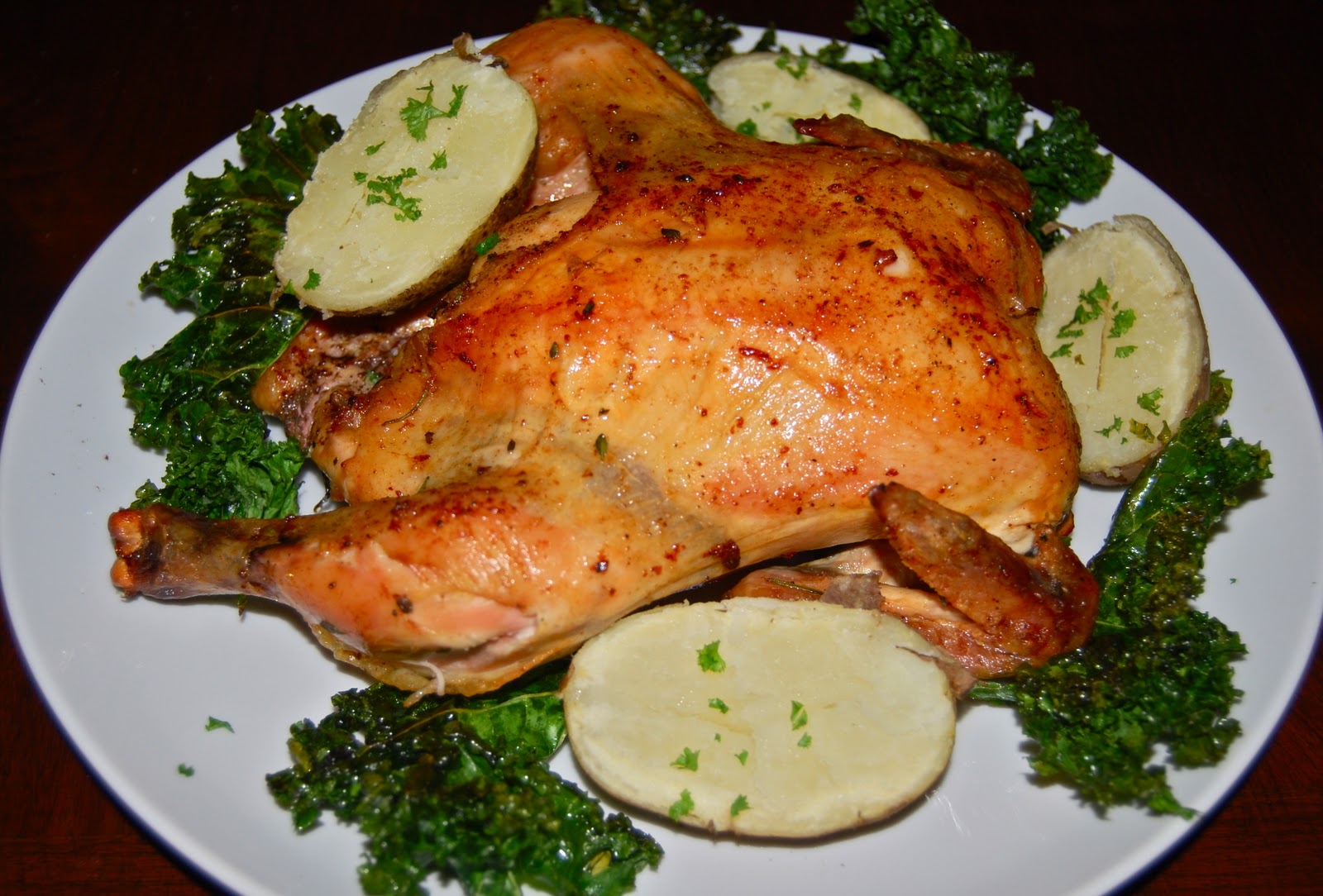
Rotisserie Chicken (Pollo al ast)

Rotisserie chicken, or "pollo al ast,"  is a favorite of kids and a memory of lazy summers on the beach in Catalonia - a treat on those summer Sundays as a child. In Spain, the rotisserie chicken or "pollo al ast" is typical in Catalonia. However, it has extended through Spain and beyond its borders. In Catalonia it is not uncommon for many moms to plan the Sunday meal of rotisserie chicken, usually prepared and bought in a "pollería" on the way home from the beach with french fries and a salad. Even the best cooks need a break from the kitchen. 
In my hometown and during my teenage years with not a lot of money this chicken was the equivalent of fast food, but healthier. We would get together on Fridays and adults with small children would gather at the only outdoor brew bar (closed in winter) in town that sold hot dogs or "Frankfurts" and chickens with fries and a salad. Friends could talk and laugh while children could play since it was outdoors. Spanish restaurants are child friendly and it is not uncommon for many of them to have an outdoor jungle gym.


The rotisserie is a process of cooking the chicken on a spike that turns in a high flame so it cooks evenly. The skin gets crispy while keeping in the juices so it is moist inside. The chicken has a rub of lemon, thyme, rosemary, olive oil and, of course, the secret ingredient that every business claims to add. They baste them often during the cooking process.


As I said, this chicken is and was a favorite of children. I remember that one summer some friends sent their 11 year old daughter to pick up the chicken from the butcher who also sold  "pollos al ast." On her way home she started nibbling the skin and by the time she got home she already had eaten the whole chicken. 


Our family has gone through 2 rotisserie ovens so now we cook this chicken in the oven at high heat with lemon, thyme, rosemary and pepper crumbs.


Ingredients:


1 small chicken
olive oil
1 thyme sprig
1 rosemary sprig
1 to 2 tablespoons lemon juice
salt and pepper
pepper flakes (just a few)


In an oven on very high heat, put the chicken breast side down and then up,  basting often so the skin becomes crispy. Cook it for about an hour.


I made some baked potatoes and kale chips to accompany the chicken. For the chips, rinse the kale, dry it and toss it with olive oil. Place it in a roasting  pan and put it in the oven about 30 minutes after starting the chicken.

Friday, January 6, 2012

Grilled Tilapia with alioli (Pescado Blanco con Alioli)

Tilapia or any white fish is a delight for children and adults. Spain is the second fish consumer in the world after Japan. Spanish families eat fish at least twice a week. This recipe is a grilled fish with infused garlic oil and a light alioli. When I was growing up we had fish for sure on Fridays and then another day of the week depending on price. It was also a custom that the fishermen's wives would take a basket full of fish and hop on the train, stopping in several towns and yelling out the fish of the day. Now you don't get to see that anymore.


Ingredients:

4 Garlic Cloves Sliced
1 Cup Olive Oil
1 Cayenne Pepper
Artichokes

For the Alioli:

2 Yellow Eggs
2 Garlic Cloves
Good Olive Oil 
Salt
5 Drops of Lemon Juice

In a cup add the sliced garlic to the oil to infuse the flavor. Let it rest for about 2 hours. Then put the garlic with the olive oil to simmer on low heat. When the garlic starts getting light brown, remove it and set aside. While the garlic is cooking, make the alioli(In a blender, on the lowest speed, we put the garlic until it is puréed, add the yolks and the olive oil little by little. It hasn't had to get the consistency of mayonnaise, when this is done add salt and lemon.) 

Heat the oil in which you cooked the garlic in until it gets really hot, then cook the fish for a couple of minutes or until loose, and then cook the other side. The fish should be brown but not overcooked It should be moist when eaten. Dust the artichokes in flour and fry in hot oil. Serve on a platter after drizzling with the light alioli and garlic.


Wednesday, January 4, 2012

The Three Wise Men Pastry (Roscón de Reyes)

In Spain and other Latin American Countries the Christmas period doesn't end until the Epiphany, January 6, the arrival of the three wisemen to see baby Jesus and their offerings of gold, incense and myrrh. The eve of the arrival of the three wise men there are parades all over the country with the three kings riding camels or horses, with mules carrying presents for the children. The major cities televise their parades and children also go to the streets to see Melchor, Gaspar and Baltasar. After the children have seen them they go home and put their shoes outside on a balcony or inside next to a balcony or window. The next morning when they get up there will be presents next to their shoes.


When I was little we had a big Nativity scene with shepherds, a town, animals, and of course a big star and the three wise men. Every day through Christmas we would move the star and the three kings little by little so they would get closer to Mary, Joseph and the Baby Jesus until they got there the night of the 5th. It was a very exciting time. The 6th is celebrated with a lunch. Our family tradition since the parade goes by under our balcony is to have the kids leave their shoes in the back patio the night of the 5th while we wait for the three wise men. We eat a light dinner of tapas Once the three kings have passed by, the children go to check if they got any presents and of course they do. So, in our family we receive presents the eve of the Epiphany.


The typical dessert is the "Roscón de Reyes" a circle pastry with candied fruits and dried fruits. Inside is hidden one figure of a king and a fava bean. Whoever gets the king will be blessed the rest of the year and also will get to wear a crown and whoever gets the fava bean will have to pay next the "roscón" next year.


Ingredients:


4 Cups flour
7 Tablespoons melted butter
1 Cup sugar
2 Eggs
1 Egg to brush the roscón
1 Orange Zest
1 Teaspoon rum
1 Teaspoon orange blossom water
3/4 Cup whole milk
1 Yeast envelope
Pinch of salt


First, in a stand mixer mix the wet ingredients, butter, sugar, eggs, orange zest, rum, orange blossom water, milk and salt. When they are all mixed very well add the flour and keep mixing until there is a nice and smooth dough. Make a ball and let it rest until it doubles in size. Then make a circle and add the fava bean and a little figurine and let it set for another 30 minutes. Then brush the top of the dough with the egg and add the candied fruit and sugar and put in a preheated oven at 350 ˚ F,;   Cook it for about 15 minutes or until the dough turns medium brown.

Tuesday, January 3, 2012

Carrot with Orange and Mint Soup (Sopa de zanahoria)

The origins of carrots are from Afghanistan and Persia. There are many species that still grow wild, even though now they are mostly domesticated. There are more than 2,500 species of carrots. The Dutch picked up the orange carrot because of the color of the royal house, and they were the ones that expanded it through the world. The word carrot comes from the Latin "carota" and it is rich in carotene. It is a very versatile vegetable and can be cooked in many ways and as part of sauces. Originally, though, it was used for its seeds and leafs. The carrot is very good for your eyes. Since we were little we were told to eat our carrots - they produce retinol and also are an antioxidant.


Ingredients:

1/2 Onion Finely Chopped
1 Pound Carrots
The Juice from 2 Oranges
1 Orange Zest
Chicken Stock to cover
3 Mint Sprigs
1 Ginger Sliver
1 Tablespoon Olive Oil
Salt and Pepper to taste

In a pan cook the olive oil, onions and carrots and let them get a little color. Add the chicken stock just to cover, then the mint, orange zest, orange juice and a sliver of ginger. When everything is tender put it in a blender and pureé until it becomes a velvety mix.

Serve in a bowl with mint leaves.


Monday, January 2, 2012

Blood Sausage and Roasted Pepper Rolls (Rollitos de Morcilla y Pimiento Rojo)

This recipe is my own fusion concoction of "Burgos blood Sausage with roasted red peppers and red pepper sauce." What has enriched our culture recently has been the many cultures that have been brought by the immigrants during last 25 years. During the construction boom of the 90's Spain saw an increase in people from Latin America, Sub Sahara, Morocco, Eastern Europe, Pakistan and China. They not only brought their culture but also their culinary wealth. This dish is a fusion between a Basque dish and Chinese. Rollitos de primavera.


Ingredients:

1 Pack egg roll wraps cut in four squares (can be substituted by rice wraps for spring rolls)
1/2 Burgos Blood Sausage (Morcilla de Burgos)
2 Red Peppers Roasted
4 Garlic Cloves
Olive Oil

In a pan put the garlic with a tablespoon olive oil. When the garlic starts turning brown add the peppers and their liquid. Let it simmer, remove the garlic and half of the pepper and set aside for the sauce. Add the blood sausage and with a spoon start cutting the sausage and pepper in small pieces. When the sauce is done and the remaining liquid is reduced, remove from the pan.

Take an egg roll wrap and cut in 4 symmetrical squares. Take one square and place it like a diamond facing at you. Fill it with the mix and start rolling, tucking in the sides and keep rolling. With a brush wet the tip of the remaining wrap and finish rolling - the water will work as glue. Fry them in a pan until golden brown Remove and place on a paper towel.

In a blender pureé the rest of the peppers that were set aside with the garlic and add olive oil and salt to taste. Drizzle over the rolls.

Saturday, December 31, 2011

Deep Fried Calamari in its own Ink (calamares fritos en su Tinta)

This is a fun concoction of "txipirones en su tinta." In reality they are deep fried calamari roman style. I just made an ink batter with flour, buttermilk and squid ink. I am still not satisfied but will keep working on it. The flavor was wonderful.


Ingredients:


4 Large Squid
1 Cup Flour
1/2 Cup Buttemilk or Water
2 Squid Ink Envelopes


Mix the flour, buttermilk or water and ink. Stir until it becomes a nice batter. Cut the calamari in strips and add them to the batter. Place the battered strips in a pan with hot oil and deep fry.


Chipotle Sauce:


2 Spoons Mayonaise
1 Smoked Chipotle Pepper

The Lucky Grapes (Las Uvas de La Suerte)

It is a tradition in Spain to celebrate the end of a year and the beginning of the next with "las uvas de la suerte" or lucky grapes. This tradition goes back to the end of the XIX century, but it really got a push in 1909 when there was a surplus of grapes, and some vineyard owners got creative and decided to commercialize them as the lucky grapes and from there it took off.


Why 12? Because at 12:00 we change from one year to another and the bell strikes 12 times. And why lucky? Because one is supposed to eat a grape with each bell strike, not before and not later, one at a time in unison with each strike. If you do that you will have a lucky year. In Spain, friends and families will gather at "Puerta del Sol" in Madrid, but most  Spanish families will turn on their TV sets to Puerta del Sol to watch the Bell Tower in the old Post Office Building. Puerta del Sol is the center of Madrid and it is also the km zero. After the bell strikes are over everybody gets ready to go out and spend the night celebrating with family and friends. This day everyone belongs to one family. 


At 4:55 PM in the U.S. We turn to Spanish TV, get on Skype and celebrate with the rest of the family. Who would have imagined in 1909 that we would be able to do something like this?

Friday, December 30, 2011

Coca de "Escalivada" con Romesco Sauce

The "coca" is a type of Catalan pastry and can be sweet or savory. The dough is very much similar to pizza, even though the coca is not related to or inherited from the Italian pizza. I made a savory one with "escalivada" - grilled vegetables, anchovies and "romesco" sauce. The combination of ingredients is wonderful - eggplant brought to Spain by the Moors, peppers from the Americas and onions from Asia. I have always enjoyed this coca since I don't have a sweet tooth as indicated by my few desserts posted but I wil get into it. When walking into a pastry shop in Catalonia you will find these cocas among their many specialties.

Tasty roasted vegetables over a homemade dough


Ingredients for the dough:

2 Cups Flour (can be substituted by gluten free flour)
1 Cup Lukewarm Water
1 Envelope Yeast (gluten free)
Salt

Ingredients for the Toppings:

1 Red Pepper Grilled
1 Yellow Pepper Grilled
1 Green Pepper Grilled
1 Eggplant Grilled (optional)

1 Caramelized Red Onion
6 Anchovy Fillets (optional)

Ingredients for the Romesco Sauce:

1 Head of Garlic roasted
3.5 oz. Toasted Almonds
1.1 oz. Hazelnuts
4-5 Ripe Grilled Tomatoes
1 Slice Toasted Bread
1 Ñora (just the meat) or Chile Ancho hydrated and the meat removed
Salt

On a counter lay the flour and make the form of a volcano. In a bowl put the yeast, 2 tablespoons flour and add a 1/2 cup warm water. Let it rest for few minutes. Pour the mix over the volcano little by little and start working the flour with the mix. Pour the other 1/2 cup  water and keep kneading. Make a ball, put it in a bowl brushed with oil and set aside in a warm place covered with a kitchen cloth for about  two hours or until it doubles in size.

In the meantime grill the vegetables, peppers, garlic and tomatoes for the sauce in a hot oven until brown. Put the peppers in a plastic bag and let them cool off, peel them, remove seeds, and cut them in julienne. In a pan caramelize the onion with a tablespoon of olive oil. 

To make the sauce, remove the peel of the tomatoes, add the garlic, bread, the meat of the dried pepper, almonds, hazelnuts, salt and olive oil and blend everything together.

Roll the dough forming a rectangle, brush it with olive oil, lay on the peppers, egg plant, caramelized onions and the anchovies. Put it in a preheated oven at 400 farenhait for about 30 minutes or until done. Remove the coca from the oven and drizzle on the romesco sauce.

New Years Eve Tenderloin (Solomillo Fin de Año)

My brother, Manu, who is a great cook and a cooking enthusiast sent me this recipe with a picture included. This is a wonderful dish for New Year's Eve.


Ingredients:

2 Pound Beef tenderloin
2 Pounds of Yukon Gold Potatoes
2 Pounds of Idaho Potatoes
1 Tablespoon Butter
2 Cups Milk
1 Tablespoon Manchego Cheese, grated
1 Leek, cut in julienne
1 Teaspoon Honey
2 Onions, finely chopped
1 Head of Garlic 
1 Ripe Tomato, grated
1 Glass of Wine
1 Glass of Brandy
2 Boletus or Regular Mushrooms, sliced
Garlic Salt
Salt
Black Pepper
Parsley
2 Tablespoons Extra Virgin Olive Oil

Sear the tenderloin in a hot pan, and then put it in the oven at 365˙F for 25 minutes. Then, remove it and let it rest, covered in foil.

Boil the yukon gold potatoes with a garlic head, when tender, strain them and add cream. Mash with a potato masher or a food mill, add the cheese, and stir until you get a velvety mix. Be careful not to mix too much and save for later. 

Boil the pumpkin or Indian potatoes. In the meantime, in a pan with olive oil, add the leek that is cut in julienne. When the pumpkin is tender, strain, add the cream, the leeks, salt, and pepper. Mash it with a potato masher or food mill and save for later.

Add the sliced "boletus" (mushrooms) to a pan with a tablespoon of extra virgin olive oil. Add the garlic salt and parsley when the mushrooms are golden brown. Remove them from the pan and reserve for later.

Peel and grate the Idaho potatoes. Then, fry them in very hot olive oil. When brown, remove them from the pan and put them on a paper towel, add salt and reserve for later.

For the Spanish Sauce:

In a pan, at low heat, add the onion and the two garlic cloves until they turn a light brown color. Then, add the grated tomato, the wine, the brandy, a pinch of salt, and black pepper. Cook on a low heat for about 15 minutes, or until the alcohol has evaporated.  If you prefer, you can flambé the alcohol. Then put the sauce in a blender and purée.

To serve:

Get a metal ring and form layers. First, the mushrooms or "boletus", then the mashed potatoes, then the pumpkin or Indian potatoes, and finally the fried potatoes. Remove the ring.
Cut the tenderloin and set a couple of pieces next to the stack. Drizzle the juice of the meat, and plate with the sauce. ¡Buen Provecho!

Thursday, December 29, 2011

Walnut Cream Soup (Intxaursaltsa o Crema de nueces)

My friends reminded me that another traditional Basque Christmas Eve staple is the "Intxaursaltsa" - walnut cream soup. Walnuts as well as chestnuts, apples, pears, hazelnuts, cherries, and quince were (and are)abundant in the Basque country and where there is abundance there is a dish. In this case, one with walnuts.

The "Olentzero," a figure dated before Christianity that represents the winter solstice, has a legend that evolved through  different periods adapting to them. Today, the "Olentzero," a coal miner, will come down once a year on Christmas Eve to the village, his face dirty by coal with his beret and pipe to deliver presents to children. While the kids wait in the winter cold night for their presents they drink a glass of "Intxaursaltsa." This tradition was interrupted in the Basque Country but not in Navarre during Franco's dictatorship from 1939 to 1975, and brought back a few years after his death. Now the tradition of the "Olentzero" is very much alive. There is a strong appreciation of him (see link below).


"Intxaursaltsa" top with meringue

Ingredients:


6 ounces Walnut Pieces
2 pints Cream
2 to 3 Tablespoons Sugar
2 Cinnamon Sticks
1 Clementine Peel
Meringue


In a deep pan put the walnuts, cream, sugar, cinnamon and the clementine peel. On a low heat bring it to boil. Remove the cinnamon stick and peel and simmer for another 5 minutes. Remove from the stove and blend the mix.


For the Meringue:


4 Egg whites 
4 Tablespoons Sugar
Work the whites with a whisk or an electrical whisk until they are the consistency of whipping cream.


Serve the sauce in a glass bowl or martini glass  Top it with the meringue, a cinnamon stick, sprinkle powdered cinnamon on top and add some walnuts pieces.


To watch the "Olentzero" song go to the link:
http://tdn.com/video-olentzero-christmas-song/youtube_4d4424b0-2915-11e1-a833-001871e3ce6c.html

Tuesday, December 27, 2011

Shepherd's Style Crumbs (Migas al Pastor)

"Migas al pastor" is one of those rustic dishes, like garlic soup, that started as a hearty breakfast for shepherds and migrants. It consists of bread from previous days, bacon, chorizo and garlic. Today it has evolved into a fashionable first course in many restaurants. It is typical of Aragon, Teruel,  Castilla-La Mancha, Extremadura and Andalucia - areas of Spain where the herd of merino sheep was moved from one region to another depending on the season. The shepherds would carry with them chorizo, bacon, ham and bread - products already preserved. These migas are the Aragon style what my grandmother used to make. I don't know if she learned it because her family used to have a merino sheep herd and shepherds or because she moved to Zaragoza, Aragon, after the death of her father and met my grandfather, a medical student at the time. I am sure this recipe came in very handy during the Spanish Civil War because of the lack of food, when every crumb was saved in a napkin to use the next day to mix with milk.


Ingredients:

1 Loaf Rustic Bread 
1 Glass of Cold Water
1 Tablespoon Spanish Smoked Paprika
1/4 Teaspoon Oregano or Thyme
1 Pinch of Salt

2 Garlic Cloves 
1/2 Green Pepper cut in small pieces
1/2 Cup Bacon or Spanish Serrano Ham cut in small pieces or cubes
1/2 Cup Chorizo cut in small pieces or cubes
1 Egg per person (optional)
Grapes

First put the water in a glass, add the paprika, oregano or thyme and a pinch of salt. Mix all the ingredients with a spoon and set aside. Remove the bread crust and cut the remaining bread in small pieces. Put it in a bowl and add the glass of water with the mix of spices. Keep it over night covered with a damp cloth. The following morning, cut the bacon or ham, chorizo and pepper in small cubes. First, cook the garlic and when it starts getting golden brown remove it from the pan. Then cook the peppers and remove them as well. Next cook the ham a little and remove it, then do the same with the chorizo. Set aside all these ingredients and in the same pan with all those flavors add the bread and cook it on a low heat, stirring continuously until it starts separating. Before removing it from the pan raise the heat to high and brown it lightly. Mix all ingredients in a bowl before serving. Serve with a fried egg (optional) and decorate with grapes.


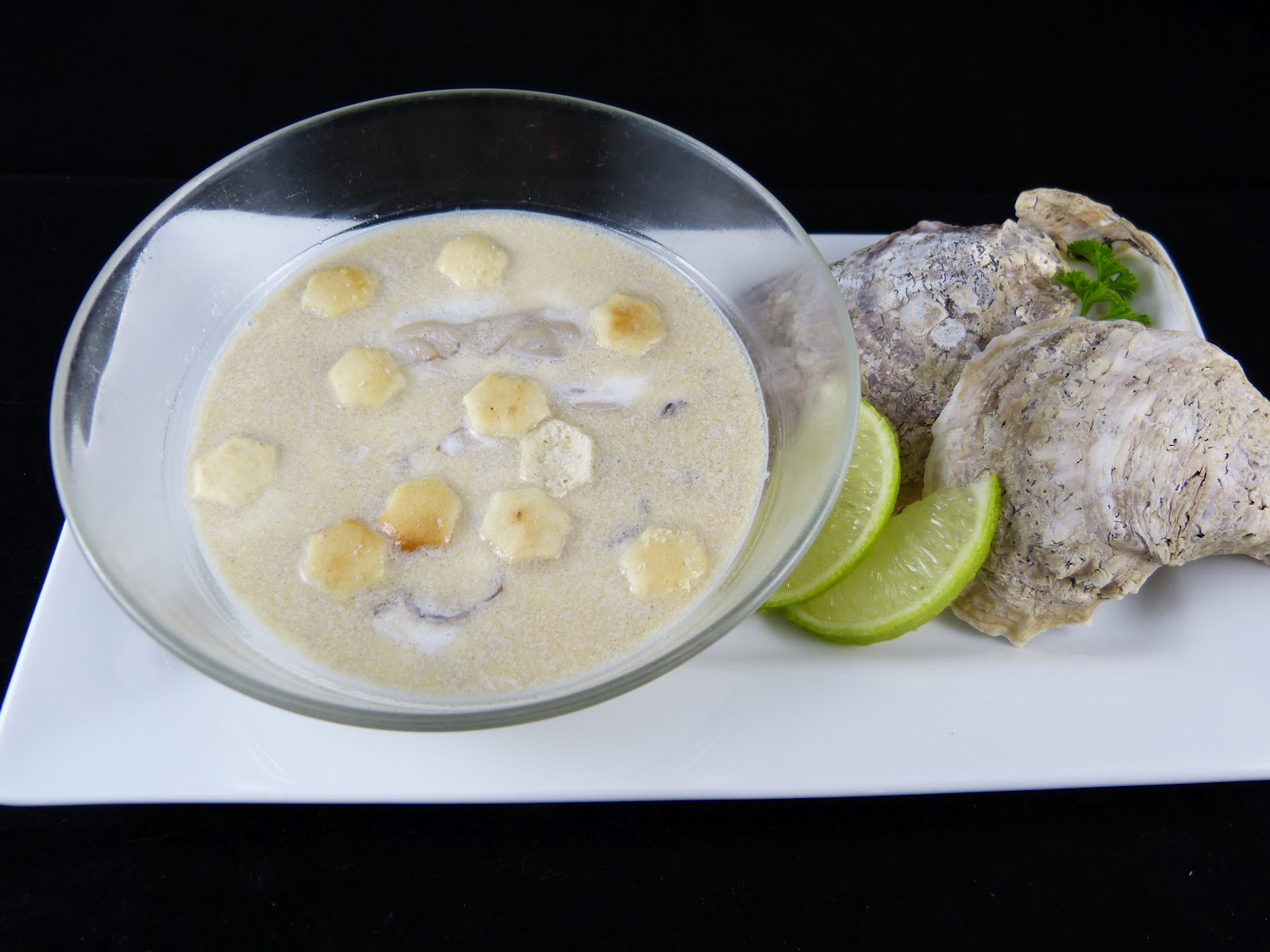
Oyster Soup (Sopa de Ostras)

This is a very typical Christmas or New Year's soup in this area of the world. You find oysters in most supermarkets, they come without the shells and in their liquid. The price is the best during this season. This is a dish that can be done whenever the oysters are at an affordable price.

Delicious!


Ingredients:

6 Tablespoons Butter
2 Small Potatoes cut in very small cubes
1 Leek
The liquid of the oysters
1 Quart Half and Half (la mitad leche y la mitad crema)
1/2 to 1 Pound Oysters (without the shells)

In a pan, add the butter, the potatoes, and the leeks. Let them cook until tender. Add the liquid of the oysters and cook for about 5 minutes. Then add the half and half, let it simmer for about 10 minutes. When done, add the mix to the blender and purée, put it back in a pan and add the oysters, do not overcook them. Serve in a bowl with lemon wedges.


Saturday, December 24, 2011

Compote (Compota)

This is a typical winter dessert, especially during Christmas time along with such staples as "turrón," "mazapan,"  "polvorones," and for the Epiphany "roscón de reyes."

I love to finish a Christmas meal with the aromas of cinnamon, orange, star aniseed and the flavors of fruits and dried fruits combined with the syrup of water, wine and sugar.


Ingredients:

1 Cup Dried Apricots
1 Cup Dried Figs
1 Cup Prunes
1 Cup Raisins
2 Apples peeled, cored and cut in squares
2 Pears peeled, cored and cut in squares
1 Orange Peel and one Lemon Peel
1 Cinnamon Stick
6 Star Aniseed
1 Cup sugar

1 Bottle Red Wine
Water

In a deep pan add all the dried fruits, pears, apples, orange peel, lemon peel, cinnamon stick, star aniseed and sugar. Add the wine and cover with water. Bring it to boil, reduce heat and let it simmer for about 45 minutes. Before serving, remove the star aniseed, peels, and cinnamon stick.

Friday, December 23, 2011

Caramelized Scallop Salad (Ensalada de Vieiras)

Galicia and Asturias in Spain have an abundance of scallops. The most traditional recipe is cooked in the oven and called "Vieiras de Santiago." The shell represent the pilgrimage route to "Saint James." At one point the shell, one being flat and the other concave, became the symbol of the returning pilgrims and it was also used as a plate "escudilla" to collect food and water, served thru the route in monasteries. Since they have to travel light, to make such a long walk, they wear it around their necks. 

I made a more refreshing recipe than the traditional one, with a green salad. The scallop cannot be cooked through, it has to be raw in the center like the tuna and it has a sweet flavor.


Ingredients:

2 Large Scallops or 3 Medium Scallops
A reduction Balsamic Vinegar or a glaze
Grape Tomatoes
Clementine or Lemon Juice
Arugula Salad or Mixed Greens
Olive Oil
Salt

In a pan, put the reduced balsamic vinegar at a high heat, add the scallops and the tomatoes, caramelize each side without cooking it through. Drizzle some clementine juice and remove from the pan.

Make a dressing with olive oil and clementine juice. Mix it with the salad greens, put it in a plate or shell, add the scallops, drizzle some of the juice, add sea salt and sesame seeds. Instead of tomatoes, you can use fruits like grapes, strawberries, pears, apples, etc.

Wednesday, December 21, 2011

Escargot Basque Style (Caracoles a la Vizcaina)

This dish cannot be more typical of Christmas in the Basque Country. After all these years I found a place in the States where they sell snails from Spain in jars (I will put the address below). Imagine how excited I was when I found them and I also had all the ingredients for the sauce. There are a few differences with the french snails. In Spain they are smaller in size and we cook them in their shells with a "vizcaina sauce" with chorizo and serrano ham. These really bring me wonderful memories of growing up in the Basque country and probably I only had them five times in the last 20 years so this is very special. One time I even made the dish out of season during the summer. My aunt Mari Carmen was in charge of two dishes for Christmas, the "caracoles" and the squid in its own ink. Both have great aromas. However, I don't know how well I followed the traditional recipe...oh, well!!! They are great anyway. Yummmm!!! Delicioso!!!

This dish can also be served as a cazuelita "small portion"

Ingredients:

2 Red Onions finely chopped
5 Garlic Cloves finely chopped
3 Tablespoons Tomato Sauce
2 Tablespoons of Choricero pepper meat already in a jar  or 12 dozen Choricero peppers dehydrated.
1 or 2 Dry Cayenne Peppers
Beef Stock
Spanish chorizo cut in cubes
Ham cut in cubes

I also add to the sauce:

1/4 Green Pepper finely chopped
1 Leek finely chopped
1/2 Cup Brandy

We can skip the step pertaining to the cleaning of the snails since I bought them cleaned and boiled and we can start with the sauce. In a pan with olive oil on low heat, add the onion, garlic, pepper, leek and cayenne pepper. When the onions are done and the vegetables tender add the half cup brandy, then add the tomato sauce. Stir for a few minutes, add the meat of the "choricero pepper" and stir for a few more minutes. Blend everything if the sauce is very thick, add the beef stock and set aside.

In another pan cook the ham, add the chorizo and cook until done.

In an earthenware pot, place the snails (previously washed), pour in the sauce, the ham and chorizo and keep it in the refrigerator until heating and serving. This is a dish that gets better if prepared two days before serving.

http://www.deliciasdeespana.com/store1/intro.asp

Cod Fish "Ajoarriero" Style (Bacalao al Ajoarriero)

"Ajoarriero" is a style of cooking in which the main ingredients are garlic, peppers and potatoes. The most famous dish is "cod fish ajoarriero style." The origins of this dish are unknown but something we know is that the word "ajo" is garlic and "arriero" is a mule driver who used to move goods on mules from one point to another in Spain. It is possible that the "arrieros" cooked with garlic and vegetables preserved in olive oil.


Ingredients:

1 1/2 Pound Unsalted Cod Fish
5 Garlic Cloves Finely Chopped
1/2 Onion
1/4 Green Pepper
1/4 Red Pepper
1/4 Yellow Pepper (optional)
3 Tablespoons "Vizcaina Sauce" 
4 Potatoes Cut in Cubes
Salt
Olive oil

In a pan place 2 tablespoons olive oil, then add the onion, garlic and peppers and cook on low heat. Remove when done and then add more oil and the cod fish to the pan. Cook on low heat (confit) and remove when done. In the same pan cook the potatoes on low heat and at the last minute raise to high heat. When done remove from the pan and add the potatoes and cod to the onions, garlic and peppers. Mix all the ingredients together and add the "Vizcaina Sauce." Serve with a poached egg. (For sauce recipe, see Bacalao a la Vizcaina - Cod Fish Vizcaina Style).

Tuesday, December 20, 2011

Octopus Galician Style (Pulpo a la gallega)

Pulpo a la gallega or "polvo a feira" is a traditional Galician style way of preparing octopus by cooking it in a copper cauldron and dipping the octopus three times in boiling water to tenderize it.  The octopus is served on wooden plates during the celebration of the Patron Saint of many villages in Galicia in Northern Spain and therefore has the name "octopus fair style."


"Pulpo a feira" served in a traditional wooden plate


I don't put the octopus three times in boiling water. Since the octopus is frozen and defrosted, it has a high water content, so I just put potatoes and the octopus in a pan to cook without water and close the pan with a lid. After 20 minutes the only thing to do is to check for tenderness and that the pan still has water.


Ingredients.


2 1/2 Octopus
4 Potatoes Peeled
Garlic
Hot Paprika
Salt
Olive Oil

In a cauldron or deep pan, cook the potatoes and octopus on  low heat until tender. Check that the pan has water from the octopus. If it is not tender and is running out of water, add hot water. When it is done let it rest for 20 minutes. In the meantime, cut the potatoes in small pieces and fry them in a pan with oil and garlic. Then cut the octopus in small pieces -  first the legs, and then the head if tender. Place everything on a wooden plate, add salt, hot paprika, drizzle some olive oil and serve.

Saturday, December 17, 2011

Spanish Meatballs (Albondigas)


The word "albondiga" comes from the Arabic word al-bunduqa meaning hazelnut, and it got its name from its round shape, simulating a hazelnut. It is not strange that we find so many words that are of Arabic origin in Spanish since Southern Spain, Al-Andalus, was almost 800 years under Arabic rule, and that translates into ¼ of Spanish vocabulary of Arabic origin.  The Spanish meatball must have as many recipes as cooks. As a matter of fact, I think every time I make them I change something because I don’t have an ingredient or because I want to add another.


Ingredients:

1 Pound Ground Beef
½ Pound Ground Pork
7 Smoked Bacon Strips (crispy, crushed in bits)
1 Slice of Rustic Bread soaked in Milk
½ Cup Parsley Finely Chopped
3 Tablespoons Garlic Cloves Finely Chopped
1 Egg

(Usually I make them 1/3 beef, 1/3 veal and 1/3 pork but I have to say these were very tasty.)


In a large bowl mix the ground beef and pork. Add the bread, bacon, parsley, and garlic, and keep mixing the ingredients very well. Finally, add the egg and mix it with the rest.

Start spooning the mix and work to form meatballs the size of a ping-pong ball until you are done. I made about 18 balls out off this mix.  The next step is to dust them with flour, and then fry them in olive oil to sear them. When all the balls are seared set them aside while making the stew.

For the stew:

1 Onion Finely Chopped
1 Garlic Clove Finely Chopped
1 Tomato Chopped or 1 Can
3 Medium Potatoes
2 Boxes of Oyster Mushrooms
1 cup Peas
Chicken or Beef Stock

First, make the "sofrito." In a pan at a low heat, cook the onion and garlic  until translucent. Then add the tomatoes until it is almost a paste, add the mushrooms and potatoes, and cover with the chicken stock. When the potatoes are half done add the peas. Keep cooking and when the potatoes are almost done add the meatballs and cook for another 5 minutes.