Showing posts with label Side dishes. Show all posts

Thursday, May 24, 2012

Sunchoke Salad (Ensalada templada de patacas)


Sunchokes - also known as Jerusalem artichokes and "patacas" in Spanish - are a knobby root vegetable indigenous to America. A tuber, it grows under tall stalks and is a member of the sunflower family. My father-in-law has an abundant supply every spring and fall so we have a variety of ways to use them raw or cooked. 


Ingredients:


1 lb. sunchokes, finely sliced (you can peel them but I just scrub them well and rinse with cold water)
1/2 cup leeks, sliced
1 red pepper, cut in strips


2/3 cup whipping cream
1 cube instant chicken bouillon
1/8 teaspoon ground nutmeg
pepper to taste
1/2 cup shredded mozzarella cheese
2 teaspoons corn starch


Boil the artichoke slices several minutes in water and then add the leeks and red pepper.  Contunue cooking until tender and then drain off the water.


For the sauce, heat the whipping cream with the spices. Stir well until it bubbles and then add the cheese.  Add the cornstarch, stirring again until the sauce is smooth and creamy. Serve on a platter with the sauce drizzled over the vegetables.

Thursday, May 3, 2012

Green Peas with Ham and Eggs (Guisantes con jamón y huevo)

This used to be one of my grandfather's favorite dishes for supper. He enjoyed eating very much. My mom also enjoys making it, especially because she and my son don't like red meat. He can eat a whole serving plate of peas if we don't remind him that it is to share. The best part is that it is simple, and quick to make.


Ingredients:

1/2 tablespoon olive oil
1/2 Onion
1 bag of frozen peas if there are not fresh available 
1 egg per person
3 Tablespoons chicken stock
2 oz. Serrano Ham, prosciutto, or bacon

In a skillet, add the olive oil and the onions. When the onion become translucent, add the green peas and the chicken stock and let it simmer to reduce. Then add the ham or bacon and let it cook for about 2 minutes. Finally add a poached or hard boiled egg (1 per person)


Monday, April 30, 2012

Foie Gras Stuffed Morels (Colmenillas rellenas de foie)

Finally! Spring is the time of the year that I really look forward to. Not only because every flowering bush and tree starts blossoming but also because it is morel hunting season. The morel is a not very attractive mushroom that compensates for its physical appearance with its great earthy and sweet flavor. In Spain morels are also called "colmenillas" because they resemble the look of a beehive.


I found some morels at our local organic store. I couldn't resist buying them but almost went broke. I usually get them from a friend, even though the last couple of years I managed to find 4 or 5 (morels, not pounds) not far from where we live. Morel hunters keep very secret the places where they find them. Usually they are around dead elm trees and spread through spores. Therefore, once you pick morels it is important to shake them before you put them in a bag or basket.


Ingredients:

14 morels (two per person)
3-3 1/2 ounces foie
2 shallots cut in julienne
7 tablespoons chicken stock
3 tablespoons white wine
1/2 cup cream
1 Tablespoon butter
salt to taste

Clean the morels with water and blanch them for a couple of minutes. Then remove from the pan and bring to room temperature. Fill twelve of the morels with foie. It is easier to do this if the foie is cold.

In a pan melt the butter and cook the shallots and the remaining two morels (cut in half) for a couple of minutes. Then add the chicken stock, the wine and let it reduce. Add the stuffed morels, cover and simmer for 7 minutes. Then add the cream and simmer for another 5 minutes.  Remove the stuffed morels and blend the rest of the mix well to finish the sauce. Serve as an appetizer or tapa.


They are just delicious! ¡Buen provecho!


Saturday, April 21, 2012

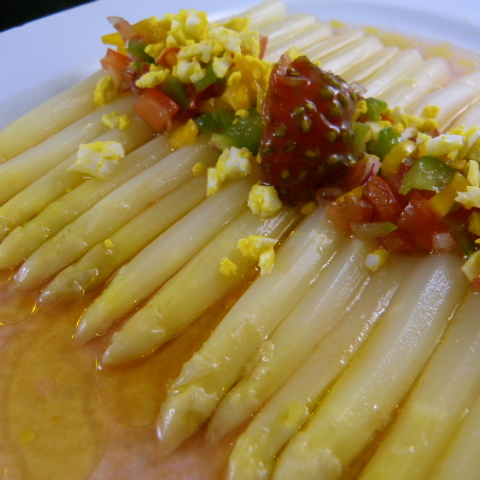
White Asparagus with Vinaigrette Salad (Esparragos con ensalada de vinagreta)

This is the time of year to eat fresh white asparagus. You can preserve them in brine or eat them. Today I made them with a salad vinaigrette.


Ingredients:


One bunch white asparagus peeled and boiled.
1/2 red tomato, seeds removed
1/2 black heirloom tomato, seeds removed and save to decorate
1/2 cup finely chopped green pepper
1/2 cup finely chopped yellow or orange pepper
1/2 cup red onion finely chopped
1/2 clove of garlic finely chopped
1/2 egg finely chopped
1/3 vinegar
2/3 olive oil
salt and pepper


Peel and boil the asparagus, making sure that there are no strings. Mix the rest of the ingredients. Make a vinaigrette by adding some of the yolk, whisk well, and add to the rest of the ingredients. Top the white asparagus with the vinaigrette.  


Monday, March 26, 2012

Fresh White Asparagus with Béarnaise Sauce (Espárragos blancos frescos con salsa bearnesa)

The region of Navarre is one of the vegetable gardens of Spain and Europe. The produce is bountiful and one of the stars is white asparagus and it is white because it grows underground and it doen't get to see the sunlight. They sell most of it canned but you still can find fresh spears. The canned ones from Navarre are getting harder to find in Spain due to exports and their reputation as being among the best. I couldn't find fresh white asparagus from Spain where we live so these are from Peru. They tasted sweet and with the acidity of the sauce were amazingly good.


1 bunch white asparagus (cut off an inch at the bottom of the spears)


For the sauce:

3 tablespoons good quality vinegar 
1 teaspoon dried tarragon 
1 teaspoon dried parsley
2 egg yolks
1 tablespoon hot water
6 tablespoons butter, melted
the juice of half a lemon
salt

Peel the outer layer of the asparagus with a potato peeler. Put the spears in water and boil them until tender. Remove from the pan and place in ice water. You can warm them later by dipping them in hot water for a minute or so.

In a pan heat the vinegar, tarragon and parsley and let it reduce to about half. Remove from the pan and add the mix to a double boiler pan. Let it cool off to warm and then add the egg yolks, stirring vigorously. Add a tablespoon of hot water and keep stirring until it is very well mixed. Add water to the bottom part of the double boiler and let it boil softly. In the microwave soften the butter and add it in three or four portions to the mix. Keep stirring, add the lemon and salt, and continue to stir. If the sauce starts curdling, remove from the heat and add a tablespoon of hot water.


Thursday, March 8, 2012

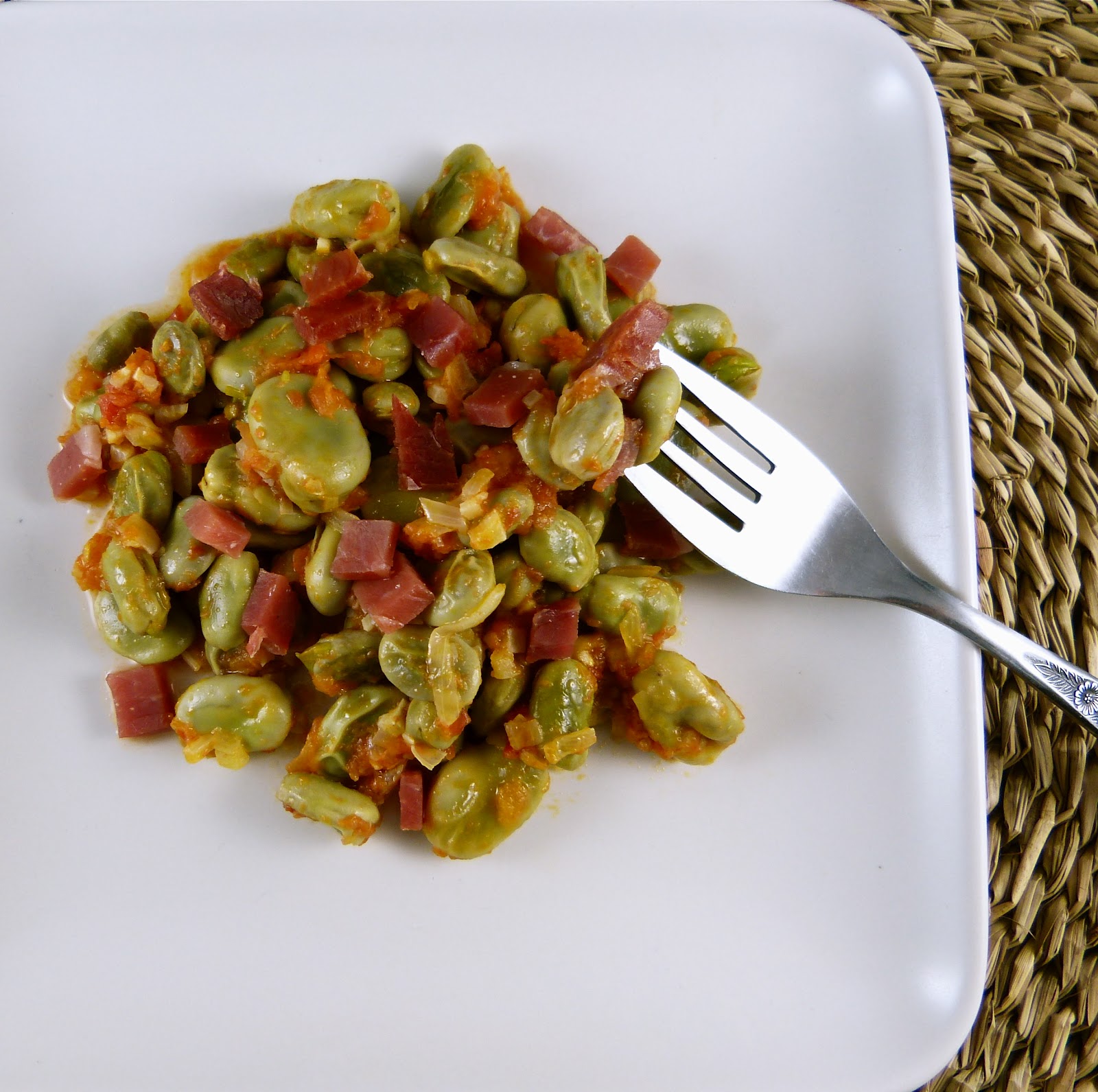
Fresh Haba Beans (Habas con tomate y jamón)

The haba bean was the only bean known in Europe until the discovery of the new world. The habas come in a pod and they have to be removed. If they are fresh and green they are called habas but if they are dry they are fabas.


In my house it was not a dish that was made often since my dad disliked them very much to the point of getting sick. There is a good reason behind that. During the Spanish Civil War (1936-1939) my dad was just a 10 year old boy. The three years of war stole his childhood  and those of many other kids of his generation. Three years of fear. Three years of seeing what no child should see. Three years of bombs, shootings, massacres, and planes dropping bombs like candy. Three years of  running to find shelter, looking for food, helping the injured, hiding the innocent. Three years! Three years of brother against brother, neighbors against neighbors.

The day of the bombing of Gernika or Guernica, there were two other towns bombed that had as much damage or more. One was my father's hometown and the other Durango. My hometown lost most of its houses to the German bombs.

My dad and his family had to move to a good samaritan's "caserio" (Basque farm house).  Much of his time was spent picking haba beans -  eating them raw and bitter or if they were lucky cooked with some lard. That is the reason he hated them. Sometimes my mom would make a small portion for my uncle who, contrary to my dad, never grew to dislike them. When my uncle would have some I would always ask him if I could have some myself because I really enjoyed them. I am glad my mom always made them for my uncle.

Yesterday, I found fresh habas in our "Just Local" store so I bought some, peeled them and cooked them today for lunch for my husband and me. Usually, it doesn't have tomatoes.


Ingredients:

1 pound fresh haba beans
2 tablespoon olive oil
2 garlic cloves finely chopped
1/2 onion chopped
2 grated riped tomatoes
1 thick slice Serrano ham, cut in cubes
salt and pepper to taste

On a low heat  put the oil,  onion and garlic in a saucepan. When the onions are getting translucent, add the haba beans and cover with a lid. When they are getting tender add the tomato and let it simmer until they are done. Finally add the serrano ham and serve.



Vegetable Casserole (Menestra de verduras)

Two areas in Spain along the Ebro River are Navarra and La Rioja. They are known for great vegetables, such as green beans, peas, artichokes, white asparagus, cauliflower, carrots, etc. Because of the abundance of these vegetables, a traditional dish is the "menestra de verduras." Now, it is a dish eaten all over Spain, especially at this time of year. I was lucky to find most of the ingredients at "Just Local."


Ingredients:

6 baby artichokes, peeled and cut in halfs or quarters
1 cauliflower head
1 pound green beans
6 fresh white asparagus, peeled
1 can peas
3 eggs
Serrano ham, cut in little cubes

Peel the asparagus with a potato peeler until you get to the tender part. Boil the vegetables in batches. Since they need different boiling times, use two pots to speed up the process. In one pot with a pinch of salt, boil the asparagus until tender. In the same pot  boil the cauliflower until tender, then boil the green beans and reserve the water. At the same time that the asparagus are boiling, in the second pot boil the artichokes with few drops of lemon and salt until tender. Then boil 3 eggs and discard the water because it is bitter. 

In a casserole place some olive oil and the chopped garlic and sauté lightly. Then add 2 cups of the reserved water and about a tablespoon flour. stirring to thicken the sauce. Then arrange the vegetables and eggs on a platter with some of the juice and top with the Serrano ham. (some people like to sauté the ham with olive oil and then top the dish with it.)


Saturday, March 3, 2012

Grilled Baby Artichokes (Alcachofas a la brasa)

This is great time of the year to eat artichokes. One of my favorite vegetables, in reality the artichoke is a thistle and the edible part is the bud of the artichoke flower. It is a Southern European product that grows along the Mediterranean. One way to make them is on the grill to serve as a tapa or side dish.


2 baby artichokes per person
lemon juice
olive oil
Maldon salt o sea salt
aluminum foil


Remove the outer green leaves until you get to the lighter color. Cross cut the top of the artichoke and then cut them in half or quarters. You will have to do this one artichoke at a time. Once you peel and cut the artichoke, it turns black because of the oxidation. To avoid the change of color, put them in water with few drops of lemon juice or add a bunch of parsley.


Prepare squares of aluminum foil and place a half artichoke on each one. Drizzle with olive oil and wrap tightly. When you have all of them ready, put them on a grill whose coals are red. If you have wood, use it to give a more natural smoky flavor. Check for tenderness and remove from the grill when done.


Unwrap the aluminum foil and you will have a beautiful and juicy artichoke. Serve them on a platter seasoned with Maldon salt or sea salt and drizzle with extra virgin olive oil. 

Grilled Tomatoes With Mozzarella (Tomatitos a la plancha con mozzarella)

At the organic store I found these wonderful heirloom, pear and cherry tomatoes. They were screaming grill me, eat me. So, I listened.


1 box heirloom, cherry and pear tomatoes
2 balls fresh mozzarella, sliced
balsamic glaze
salt
basil

Place the tomatoes in a metal basket for grilling. When they start getting a brown color add the mozzarella, moving the basket so it doesn't get stuck. When the mozzarella starts melting, spoon everything from the basket to a platter, add balsamic glaze, salt and basil. It makes a great lunch, a side dish, or salad.


Saturday, February 25, 2012

Catalan Spinach (Espinacas a la catalana)

What a simple and fast dish to cook! If we are looking for a side dish that will not take a lot of time and want a flavorful dish that the kids will eat, this is it.


Ingredients:


1 apple peeled and cut in cubes
1/2 cup raisins (presoaked)
1/2 cup pine nuts
1 bag spinach
Maldon salt
1 tablespoon olive oil


In a sauce pan put the olive oil, add the apple and cook until it is caramelized. Then add the raisins and the pine nuts, give a couple of stirs and add the spinach. It has a high content of water and when it starts to sweat remove them from the pan. It will keep cooking. Serve on a platter and add Maldon salt.


¡Bon profit!

Thursday, February 9, 2012

Cauliflower au gratin (Coliflor gratinada)

"Coliflor gratinada" is great as a tapa or as a side dish to complement meats. My family tradition was/is to serve it on Christmas. Children love it because it has the creaminess of the béchamel and the softness of the cauliflower. The only person I know who didn't like it as a child was my older brother, Javier. Well, I hope he likes it now.


Ingredients:
the florets of 1 cauliflower
4 tablespoons butter
4 tablespoons flour
4 cups hot milk
salt
1 teaspoon nutmeg
parmesan cheese (optional)
Boil the cauliflower with a pinch of salt until tender, remove carefully from the water and strain it.

For the béchamel:

In a sauce pan, put the butter to melt. While it's melting, be careful not to burn the butter. Afterwards, add the flour and stir it. When it is mixed, start adding the hot milk little by little, always stirring it. Add the salt and nutmeg, keep stirring until it thickens, or until it is the consistency that you like.

Put the florets on an ovenproof plater, add the béchamel on top of the cauliflower, add a few thin slices of butter, parmesan cheese (optional), and put it into the broiler until it browns.