Monday, April 30, 2012

Foie Gras Stuffed Morels (Colmenillas rellenas de foie)

Finally! Spring is the time of the year that I really look forward to. Not only because every flowering bush and tree starts blossoming but also because it is morel hunting season. The morel is a not very attractive mushroom that compensates for its physical appearance with its great earthy and sweet flavor. In Spain morels are also called "colmenillas" because they resemble the look of a beehive.


I found some morels at our local organic store. I couldn't resist buying them but almost went broke. I usually get them from a friend, even though the last couple of years I managed to find 4 or 5 (morels, not pounds) not far from where we live. Morel hunters keep very secret the places where they find them. Usually they are around dead elm trees and spread through spores. Therefore, once you pick morels it is important to shake them before you put them in a bag or basket.


Ingredients:

14 morels (two per person)
3-3 1/2 ounces foie
2 shallots cut in julienne
7 tablespoons chicken stock
3 tablespoons white wine
1/2 cup cream
1 Tablespoon butter
salt to taste

Clean the morels with water and blanch them for a couple of minutes. Then remove from the pan and bring to room temperature. Fill twelve of the morels with foie. It is easier to do this if the foie is cold.

In a pan melt the butter and cook the shallots and the remaining two morels (cut in half) for a couple of minutes. Then add the chicken stock, the wine and let it reduce. Add the stuffed morels, cover and simmer for 7 minutes. Then add the cream and simmer for another 5 minutes.  Remove the stuffed morels and blend the rest of the mix well to finish the sauce. Serve as an appetizer or tapa.


They are just delicious! ¡Buen provecho!


Friday, April 27, 2012

Beef Stew Braised in Red Wine (Estofado de carne)

This is a hearty dish of braised or slow-cooked beef with vegetables and a good red "Rioja" wine. It is a favorite of the wine producing regions of Spain and can be served with creamy garlic mashed potatoes.


Ingredients:

2 spoons olive oil
2 pounds beef, cut in cubes
1 large onion
2 large carrots
1 celery stalk
1 garlic head
12 peppercorns
2 spoons flour
4 cups red wine
2 cups beef stock
2 sprigs thyme
2 sprigs rosemary

2 grated tomatoes (optional)
2 potatoes cut in cubes (optional)


Dust the meat in flour and then brown it with two spoons of oil in a deep oven-proof pot. (Do in batches if necessary.) Remove the meat as it gets brown and set aside. In the same pot add the peppercorns and vegetables and and let them sweat. Then add 1/2 cup wine to get the caramelized juices left in the pan from the meat, and stir.  Return the beef to the pot and add the rest of the wine, the beef stock and the aromatics (thyme and rosemary). Bring to a boil and then put it covered in a preheated oven at 375˚ for 2 hours or longer until the meat is tender. When cut with a fork it should fall apart. Let the stew rest for a few minutes and serve with mashed potatoes or parsnip puree and slices of bread.


Wednesday, April 25, 2012

Melon and Ham (Melón con jamón)


This is a summer favorite for its simplicity, easy preparation, and the contrast between sweet and savory. It is a very refreshing dish.


Ingredients:


cantaloupe or any other kind of melon
Spanish Serrano ham


Utensils:


melon ball scoop
apple core remover 


Tuesday, April 24, 2012

Stuffed Pork Tenderloin with Roasted Apples (Lomo relleno con manzanas asadas)

I remember my grandmother used to make a pork tenderloin stuffed with dried prunes and served with a very exquisite sauce. While I was thinking of that dish, and memories of my childhood, I had a little detour down memory lane and ended up recalling a favorite "merienda" (afternoon snack) of "quesitos" "El Caserio" (soft cheese) spread on a piece of bread and topped with apples. In turn, I decided to stuff a tenderloin with Serrano ham, "Laughing Cow" cheese (the Spanish "El Caserío" version of this cheese got the idea from them), apples, mixed greens and pistachios.


Ingredients:


2 pound pork tenderloin, butterflied
6 slices Spanish Serrano ham
1 box original Laughing Cow cheese
1 large pink lady apple, cut in julienne
mixed greens
24 pistachios
salt and pepper to taste
2- 3 tablespoons olive oil
1/2 tablespoon flour
1 cup moscato wine
4 apples, cut in halves or quarters
butter


Butterfly the pork or ask the butcher to do it for you. On top of the pork lay the ham, cheese, apples, greens, and pistachios. Roll the pork and tightly tie it with butchers twine. In a deep pan put about 2 to 3 tablespoons olive oil and brown the pork. Remove the pork from the pan, put it on a baking sheet, cover with aluminum foil and bake at 350˚ for about 40 minutes. 
Deglaze the pan used to brown the pork, add 1/3 cup wine and let it reduce. Then add the flour and the rest of the wine, stirring until the sauce thickens. 
During the last 15 minutes, put the apples brushed with butter in the oven. While they are cooking, let the pork rest and then slice it. Serve on a platter with the apples and the sauce. 

Sunday, April 22, 2012

Chicken Breasts with Lemon Sauce (Escalope de pollo al limón)


This dish works equally well with chicken or turkey. It is a favorite with kids and big people too!


Ingredients:

4 chicken breasts, sliced in thin pieces
1 1/2 cups flour
1/3 cup grated parmesan cheese
3/4 teaspoon nutmeg
salt
pepper
2 eggs, well beaten
olive oil
1/2 stick butter
chopped parsley
3 tablespoons lemon juice
capers

Mix the flour, cheese, nutmeg, salt and pepper in a bowl. Dust each chicken piece in this mixture, then dip in the egg and then dust again in the flour.  Place olive oil in a pan and cook the chicken pieces on medium-high heat until brown on both sides. 
For the sauce, melt the butter with the parsley and then add lemon juice and capers. Stir well and spoon over the chicken.


Saturday, April 21, 2012

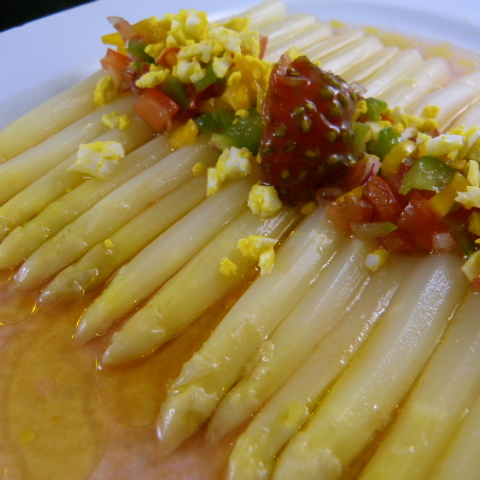
White Asparagus with Vinaigrette Salad (Esparragos con ensalada de vinagreta)

This is the time of year to eat fresh white asparagus. You can preserve them in brine or eat them. Today I made them with a salad vinaigrette.


Ingredients:


One bunch white asparagus peeled and boiled.
1/2 red tomato, seeds removed
1/2 black heirloom tomato, seeds removed and save to decorate
1/2 cup finely chopped green pepper
1/2 cup finely chopped yellow or orange pepper
1/2 cup red onion finely chopped
1/2 clove of garlic finely chopped
1/2 egg finely chopped
1/3 vinegar
2/3 olive oil
salt and pepper


Peel and boil the asparagus, making sure that there are no strings. Mix the rest of the ingredients. Make a vinaigrette by adding some of the yolk, whisk well, and add to the rest of the ingredients. Top the white asparagus with the vinaigrette.  


Monday, April 16, 2012

Cheese and Fruit Brochette (Brocheta de queso y fruta)

The brochette is another fun way to serve cheese with grapes, which is the most common fruit to go with cheese. As a matter of fact, there is a Spanish saying "las uvas con queso saben a beso" (Grapes with cheese taste lake a kiss.) In any case, fruit and cheese make a good pairing. I added mango because I like the perfume and sweetness of this fruit. I also used the Spanish cheese Manchego from La Mancha and a smoky Basque cheese called Idiazabal.


Ingredients:


Manchego cheese
Idiazabal cheese
green grapes
red grapes
mango
skewers

Saturday, April 14, 2012

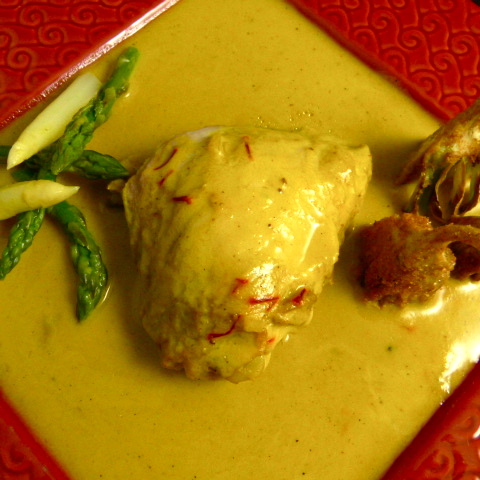
Chicken with Saffron Sauce (Pollo con salsa al azafrán)

One of the great star spices of Spain is saffron ("azafrán"), as we mentioned in previous entries. Saffron is the stigma from the crocus flower and every flower has three stigmas. The bulbs are underground for three years. After this period the bulbs are removed from the ground, leaving the soil to rest for 10 to 15 years and moving to another plot to plant back the best bulbs and discard the worst. The stigmas are picked by hand, making it a very laborious process since to get a kilogram you need about 200,000 flowers and then the stigmas have to dried. All of these reasons make saffron the most expensive spice in the world. Fortunately, you only need a small pinch or a few threads to infuse flavor and color to any dish. The best quality saffron has to be an intense red.


Ingredients:

1 thigh, chicken breast or leg per person
2 tablespoons olive oil
2 carrots, cross cut
1 leek, cross cut
2 garlic cloves, chopped
1 medium onion, chopped
1 pinch saffron
1 glass of white wine
2 cups chicken stock

green asparagus
white asparagus
artichokes
1/2 cup flour mixed with smoked paprika

In a pot, brown the chicken with olive oil and  remove it. Lower the heat, add the onion, carrots, leek and garlic and let them poach. In the meantime toast the saffron (be careful not to burn), remove it and add to warm chicken stock. When the onions are translucent, add the chicken and wine and let the sauce reduce. Stir with a wooden spoon to get all the juices of the chicken and then add the saffron with the chicken stock to the pan. Simmer until the liquid reduces to half.

Remove the chicken. Blend the sauce and then add it to the chicken. Serve with white and green asparagus and deep fried artichokes previously dusted with wheat flour and smoked Spanish paprika.


Thursday, April 12, 2012

Scrambled Eggs with Ramps (Huevos revueltos con ajetes y brotes de puerros salvajes)

"Revuelto de ajos tiernos" (scrambled eggs with garlic ramps) or "tortilla de brotes de puerros salvajes" (ramp omelet) is a Spanish staple in any household or restaurant. In Spain it is served as an appetizer or as an entree dish for lunch or dinner. It always has been very popular.


Ingredients:

1/2 tablespoon olive oil
2 eggs per person
12 onion ramps, finely chopped  

salt and pepper

Cut the eggs with an egg cutter. If you don't have one, cut them carefully with another type of cutter or scissors. Empty the eggs and boil the shells so you can fill them with the scrambled eggs. 

Whisk the eggs very well. Put the oil and ramps in a sauté pan. Cook for 1-2 minutes and then add the eggs and lower the heat. Whisk continuously to get a creamy eggs because the more you whisk the creamier the eggs become. When done to your likeness, remove from the pan and fill the egg shells. 


Sunday, April 8, 2012

Mushrooms with King Crab and Garlic (Txampis con patas de cangrejo al ajillo)

Another one of our favorite tapas is mushrooms with king crab, garlic and cayenne pepper.


Ingredients:

12 mushrooms, stems removed
1/4 onion
2 garlic cloves, minced
2 dried cayenne peppers 
2 tablespoons olive oil
olive oil
salt


Put water in a quart pot and when it boils add 2 king crab legs. Return to a boil, cook for 10 minutes and remove the crab legs when done.

In a pan put 2 tablespoons olive oil, garlic and onion and cook on a low heat until the onion is translucent. Remove from the pan. Then add the mushrooms and salt to the pan, cook until tender, and remove.

Crack or cut the crab shells with a good pair of scissors. Remove the meat and cut in small pieces. Then in a saucepan heat olive oil with garlic and cayenne pepper and when the oil is very hot add the crab for 1 or 2 minutes and then remove it from the pan.


To assemble, take each mushroom and add the crab meat with the garlic on top.


Saturday, April 7, 2012

White Bean Stew with Codfish (Potaje de Viernes Santo)

This potaje stew is made for Good Friday since Spain is 95 % Catholic. Friday is a day when we don't eat meat and for this reason in Wisconsin there is the tradition of the Friday fish fry started by German Catholics. On Fridays the restaurants couldn't afford to lose clients so the alternative was fish to attract the Catholic population. 


In Spain, we used to eat fish every Friday but now this tradition is only during lent or just on Good Friday. For centuries, the traditional dish on these days has been a potaje of chickpeas with desalted codfish. I am going to use buttery white beans instead of chickpeas.


Ingredients:


6 pieces desalted codfish
1/2 pound white beans, soaked overnight
1/2 onion, chopped
4 garlic cloves, sliced
1/2 green pepper
6 slices of roasted red pepper
2 whole dried cayenne peppers
olive oil


This is a dish you have to plan ahead because of desalting the cod. In a pot with cold water desalt the cod fish fillets at least 24 to 48 hours depending on the thickness. Change the water every 6 hours during the first 24 hours or follow the instructions of the vendor. Dry with kitchen towels or paper towel.


In a quart pan cook the onion, garlic and green  pepper. When the onions are translucent, add the white beans and let them cook on low heat until tender or they melt in your mouth. Set them aside.


To cook the cod I tried a new technique since it has to be cooked at a very low temperature, like a confit, and sometimes this is hard to do with certain stoves. What I did was use the oven at the lowest possible temperature as follows: 


First put oil, three of the sliced garlic cloves, one dried cayenne pepper and a pinch of salt in a large baggy. Then add the pieces of cod, get rid of the air, close the bag tightly, and put it in a pan with water. Them cook in the oven, checking often for doneness. The result has to be a flaky and juicy fish. 


To make the pilpil sauce, remove the cod from the bag. Transfer the oil and a few garlic slivers from the bag to a blender and blend on the lowest speed until creamy.


In a sauce pan with a little oil, cook the remaining slices of garlic and the other dried cayenne pepper. When the garlic turns lightly brown remove it from the pan and set aside.


To serve in individual pasta dishes, put beans and then the cod fish. Add the sauce on top, then the fried garlic, and top with a slice of roasted pepper. 


Thursday, April 5, 2012

Salad with Romesco Sauce (Xató de Sitges)

The Xató de Sitges is a romesco sauce typical of Sitges, a coastal town twenty minutes South of Barcelona by train. Xató is mostly used in an escarole salad, omelets, and fish. In Sitges you can find all the ingredients to assemble the salad at home: escarole (curly lettuce), red roasted peppers, arbequina olives, desalted codfish, anchovies and, of course, the xató sauce. Every year Sitges has a contest to see who can make the best Xató.


Ingredients:

escarole (if you find it) or mixed greens
2 anchovies
3 pieces of desalted cod fish
black olives
extra virgin olive oil
xató  

For the Xató:

12 toasted almonds
6 toasted hazalnuts
6 toasted pinenuts
1 walnut
1 small grilled onion
4 grilled tomatoes, peeled
1 small grilled garlic head (remove the skin after grilling)
1 garlic clove
the meat of 3 ñoras or the meat of a dried pepper. The pepper has to be rehydrated, or you can buy the meat of the peppers in a jar (1 tablespoon)
1 anchovy (optional)
1 teaspoon hot paprika
1 cup olive oil
1/2 cup red wine vinegar
salt to taste

Put all the xató ingredients in a blender and purée. Then ensemble the salad starting with a layer of xató and a layer mixed greens or escarole. Then add the cod, red pepper and olives, drizzle some olive oil, and add more xató on the side.

Monday, April 2, 2012

Lobster with Romesco Sauce over Fried Crostini (Medallones de Bogavante con romesco sobre pan frito)

Fry the bread in a pan with 2 tablespoons olive oil, remove it from the pan and add the lobster medallion. Top it with romesco sauce.


Sunday, April 1, 2012

Lobster with Romesco Sauce (Bogavante con salsa romescu)

The place of origin of the salsa "romescu" is Tarragona, Catalonia. It is an area of almond trees, piñol pines, hazelnut trees, tomatoes, garlic, dried peppers (ñoras), and olive oil from the arbequina olive. The origin of the sauce is said to predate the Romans and it was used by fishermen to preserve their catch. The three main uses of the sauce are for fish or seafood, with calçots (grilled green onions) and the "Xató de Sitges" (an escarole salad with grilled red peppers and desalted cod fish).


Ingredients:

1 medium Maine lobster per person

For the sauce:

12 toasted almonds
6 toasted hazulnuts
6 toasted pinenuts
1 small grilled onion
4 grilled tomatoes, peeled
1 small grilled garlic head (remove the skin after grilling)
1 garlic clove
the meat of 3 ñoras or the meat of a dried pepper. The pepper has to be rehydrated, or you can buy the meat of the peppers in a jar (1 tablespoon)
1 teaspoon hot paprika
1 cup olive oil
1/2 cup red wine vinegar
salt to taste

The traditional way of working with these ingredients is with a mortar and pestle but I use a blender. In the blender place the almonds, hazelnuts, pine nuts and grate them. Then add the meat of the peppers, the tomatoes, garlic, onion, hot paprika, olive oil and  vinegar. Blend everything together. It should be a smooth and thick sauce since the nuts work as thickeners. Taste it and add salt to your taste. Some people also add a slice of fried bread to thicken it.  If you don't like the sauce so thick, then add more olive oil.

To cook the lobster:

Grilled vs Boiled

I think it is a question of taste. I prefer to boil it and then use the liquid to make sauces. If you decide to boil the lobsters: Put water in a large pan (you don't need to add salt since the lobsters come from the sea and already have salt)and take the rubber bands of the claws before boiling. Bring the water to a boil, drop the lobsters in head first one at a time and bring the water to a boil again. Lower the heat and cook them for about 10 minutes until done. Remove the lobsters from the water and drain.

How to eat your boiled lobster:

Once the lobsters are boiled, you can serve them whole to your guests or you can do the work for them. Even when I serve them whole, I crack the claws with a rolling pin or the handle of a knife. Be careful!!!! Twist the claws and remove the meat. For the tail, bend the tail flippers and break them with the help of a fork. Push the meat from where the flippers used to be so the tail meat comes out in one piece, It will be tender and sweet.


The green part is the liver - you can eat it or discard it. As far as the knuckles, just bite them and, with the help of your teeth, squeeze out the meat. The body has 4 pokets. Crack it in the middle and you will find the meat on the joints where the 8 legs are attached. Dip the meat in the romescu sauce. Enjoy this delicacy!!!!


Saturday, March 31, 2012

Spanish Rice with Lobster (Arroz con Bogavante)

This is a traditional dish from the Balearic Islands of Mallorca and Menorca in the Mediterranean but its popularity has extended throughout the Mediterranean Coast. A fishermen's dish, it is made with either warm water lobster (langosta) or cold water lobster (bogavante). The difference is that cold water lobsters have claws. The rice can be cooked with different ratios of rice to fumé or fumet (fish stock). "Caldoso" rice contains more liquid and "meloso" has some liquid while "seco" describes rice that has absorbed all the stock). I did a dry rice but whatever way you decide to cook the rice you should let it rest at the end.
The rice used in this dish is a special type from Spain but any short grain will work. The ratio is 1 cup rice to 2 cups fish stock for dry rice, 3 cups of stock for meloso and 4 cups for caldoso.


Ingredients:

3 fresh Maine lobsters (1/2 per person)
1/2 onion, grated
2 cups rice ("Calasparra" or "Bomba" or a small grain rice)
1 garlic clove, chopped
1 tablespoon smoked Spanish paprika
1 cup tomato sauce
6 cups fish stock (If you live on the coast, you can make your own with fish bones, rock fish, crab, 1 onion, 4 garlic cloves, 1 celery stalk, 1/2 green pepper, 1 carrot and dried red pepper. It will be better.)
1 pinch saffron
salt to taste

Cut the live lobsters (cut the tails in medallions and the heads in half and pull off the claws). In a paella pan put 2 tablespoons olive oil and add the lobsters. Cook for about 5 minutes to get all their natural liquids and flavors. Remove them and add the garlic and onion to the pan, stirring for a couple of minutes. Then add the paprika, mix with the onion and garlic, add the tomato sauce and stir well to mix all the ingredients. Next add the fish stock, the rice (evenly) and the saffron. When the fish stock starts boiling, lower the heat and let it cook uncovered. Ten minutes before the rice is done add the reserved lobster and let the rice finish cooking. If you need to add more liquid, keep it hot. Taste for seasoning. 


Serve the rice on plates with 1/2 head lobster, 1 claw and 2 medallions per serving. Enjoy!


Green Beans with Potatoes (Judias verdes con patatas)

This is a traditional seasonal dish in Spain but now it is eaten year round. It is a very simple dish to make before a second course of meat or fish, or it can be served for supper as a single course. Usually is topped with a drizzle of oil and vinegar or a light alioli or béarnaise sauce on the side.


Ingredients:


5 medium potatoes, peeled and cut in cubes
1 lb. green beans, tips removed
4 cloves garlic, chopped
salt
olive oil
vinegar
alioli
or béarnaise sauce


Boil the potatoes with salt. When they are half cooked add the green beans. When the potatoes and beans are tender, strain them. In another pan sauté the garlic, then add the beans and potatoes and sauté a bit more. Serve on a plater along with "vinagreras" to drizzle vinegar and oil, alioli, or béarnaise sauce, and let every person add what they like.


Wednesday, March 28, 2012

Monkfish with Spanish Sauce (Rape con salsa española)

This recipe features monkfish. One of my favorites, it is an angler fish that is sometimes called "poor man's lobster." The tail of the monkfish is often cut in medallions for cooking and serving while the head and bones are excellent for soup. 


In this case I simply seasoned the monkfish medallions with salt and pepper and then grilled them on a high heat - they cook quickly. I then topped them with the delicious sauce described below.

"Salsa española" (Spanish Sauce) is one of my Mom's many specialties. It is smooth and velvety and goes really well with fish or shrimp. You can also use it with meats and poultry.

Ingredients for the sauce:
1 Small Onion, chopped
1/2 Green Pepper, diced
3-4 Cloves of Garlic
5 Large Carrots, peeled and cut in small pieces 
1 Small Can Tomato Sauce
2 Teaspoons Salt
1/2 Teaspoon Pepper
2 Teaspoons Sugar 
1/4 Cup White Wine
1 Cup Chicken Broth 
3 Tablespoons Olive Oil


Chop the onion, garlic, green pepper and carrots. Sauté in a pan with olive oil. When the onion is translucent, add the tomato sauce, salt, pepper, sugar, wine and broth and simmer until the vegetables are tender. Then put everything in a blender or hand blender and purée until smooth. 


Monday, March 26, 2012

Fresh White Asparagus with Béarnaise Sauce (Espárragos blancos frescos con salsa bearnesa)

The region of Navarre is one of the vegetable gardens of Spain and Europe. The produce is bountiful and one of the stars is white asparagus and it is white because it grows underground and it doen't get to see the sunlight. They sell most of it canned but you still can find fresh spears. The canned ones from Navarre are getting harder to find in Spain due to exports and their reputation as being among the best. I couldn't find fresh white asparagus from Spain where we live so these are from Peru. They tasted sweet and with the acidity of the sauce were amazingly good.


1 bunch white asparagus (cut off an inch at the bottom of the spears)


For the sauce:

3 tablespoons good quality vinegar 
1 teaspoon dried tarragon 
1 teaspoon dried parsley
2 egg yolks
1 tablespoon hot water
6 tablespoons butter, melted
the juice of half a lemon
salt

Peel the outer layer of the asparagus with a potato peeler. Put the spears in water and boil them until tender. Remove from the pan and place in ice water. You can warm them later by dipping them in hot water for a minute or so.

In a pan heat the vinegar, tarragon and parsley and let it reduce to about half. Remove from the pan and add the mix to a double boiler pan. Let it cool off to warm and then add the egg yolks, stirring vigorously. Add a tablespoon of hot water and keep stirring until it is very well mixed. Add water to the bottom part of the double boiler and let it boil softly. In the microwave soften the butter and add it in three or four portions to the mix. Keep stirring, add the lemon and salt, and continue to stir. If the sauce starts curdling, remove from the heat and add a tablespoon of hot water.


Sunday, March 25, 2012

Watermelon Glass (Copa de Sandia)

This cup of watermelon is a very refreshing way to finish or start a dinner.


In many towns in Spain trucks arrive loaded with watermelons and other melons. The driver with a megaphone announces they are selling the best melons or watermelons from Murcia. They drive to remote areas and then turn on their megaphones and start screaming "el melonero, los mejores melones de Murcia, baratos..." The vendors usually buy a truck load and drive from Murcia, going town to town until they sell everything. 

I thought about this story when I was at the grocery store and saw watermelons for sale. We couldn't resist and bought one. It was especially sweet and juicy, and very refreshing since it has been unusually hot for this time of the year.


Ingredients:

watermelon balls
the juice of one lemon
2 teaspoons honey
1 teaspoon ginger zest

Mix everything well and pour over the watermelon balls. Serve cold and add mint to garnish.